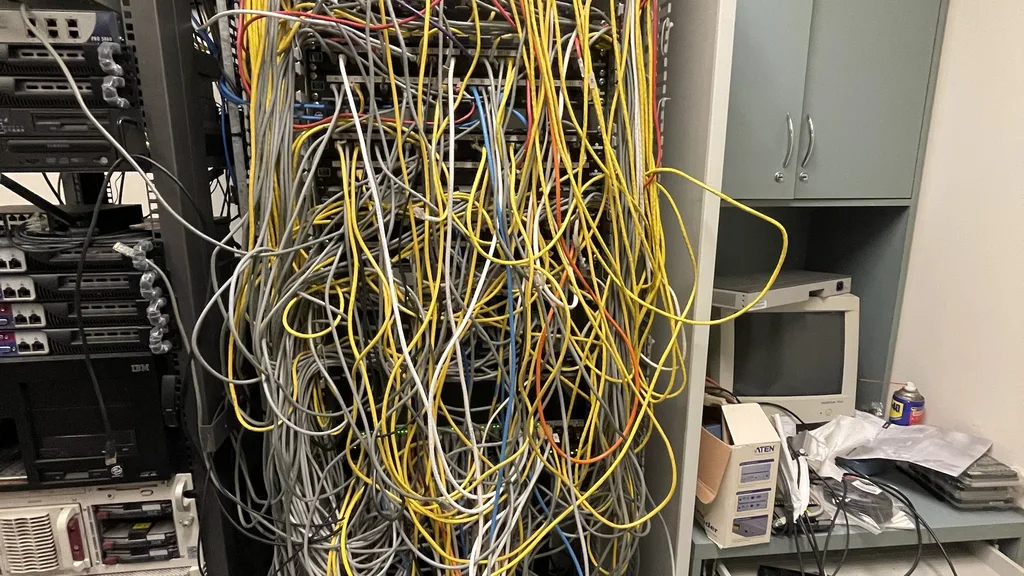
Clearing an old comms cabinet? Get a written do-not-touch list before anyone pulls a cable.
A cabinet clean-out took Cloudflare offline for 4 hours 21 minutes. The three checks before any cable comes out, and the A$1,500 trace-and-label audit.
Read the full breakdown →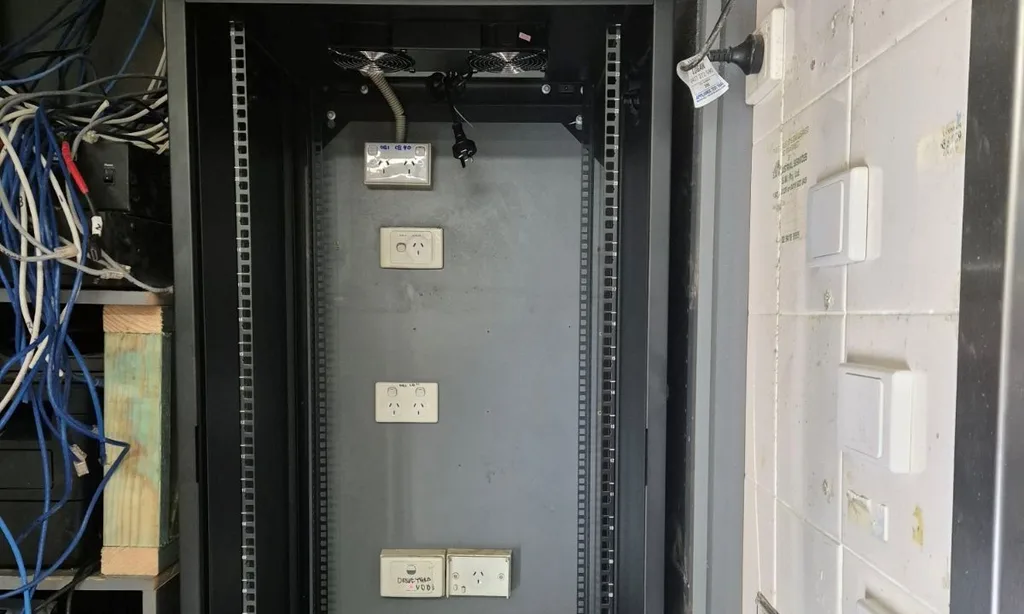
Replacing a data cabinet? Keep what works. Relabel everything you keep.
New cabinet, old felt pen. What to keep, what to relabel, and the handover that lets the next tech trace every outlet, even the hidden ones.
Read the full breakdown →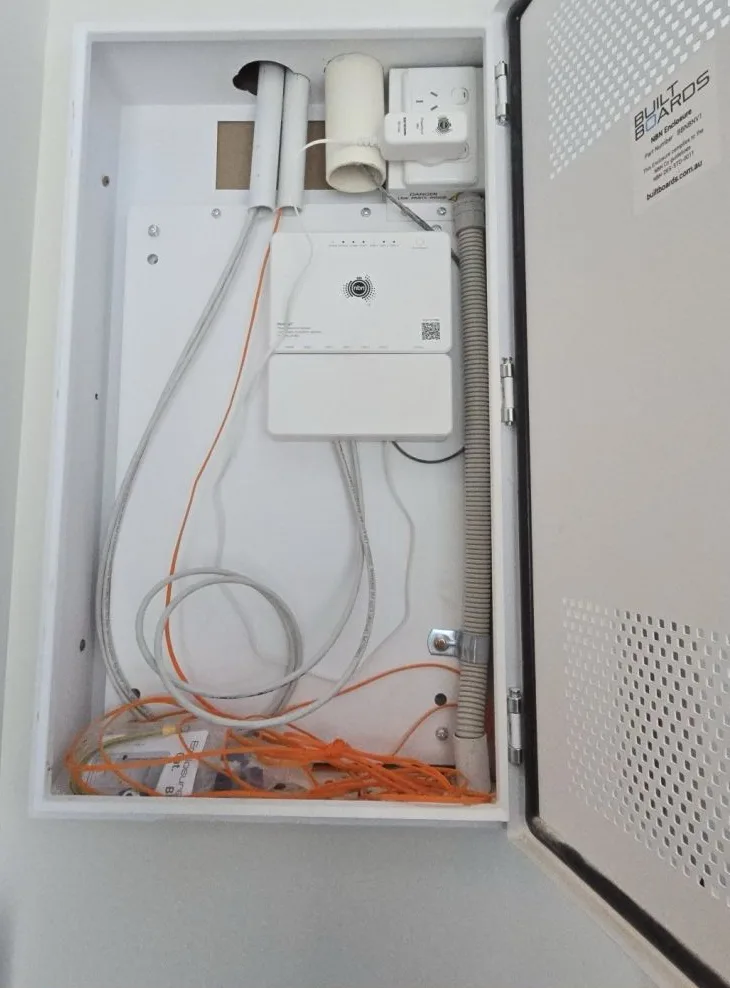
Someone signed off on this. Here's the 2-minute check.
27,798 impressions, 36 comments. Three yes or no questions to ask at the open enclosure before you accept a network install, and what it costs when nobody asks them.
Read the full breakdown →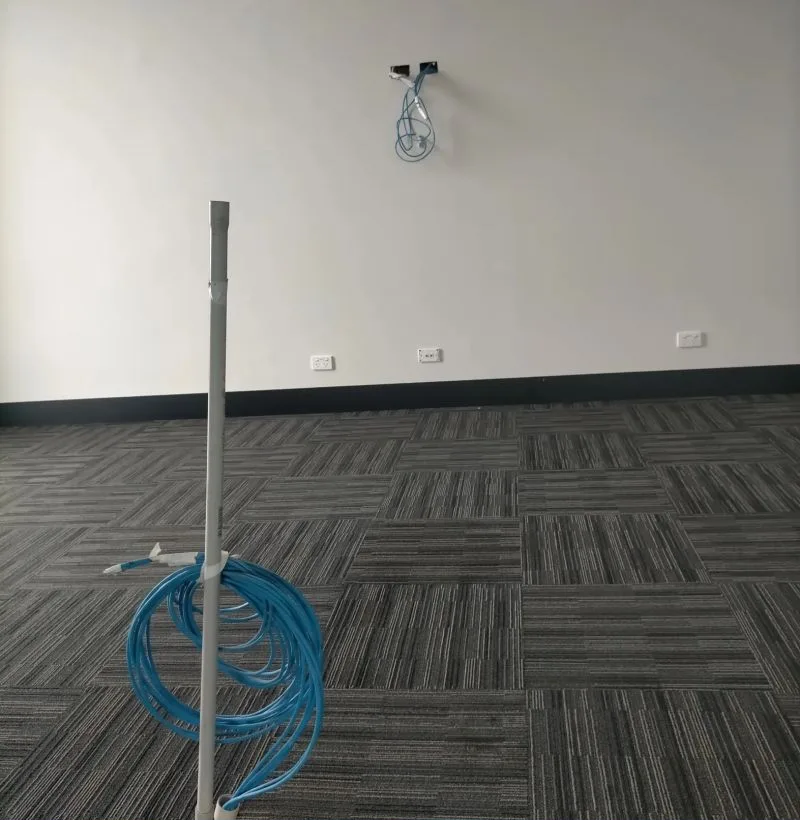
Boardroom AV cabling: the 10-minute check that saves 2 to 3 weeks.
The electricians ran Cat6 only. HDMI, USB and control were in the scope but never went in, and the conduit was too small to add them. The 8 checks to run before the walls close.
Read the full breakdown →
Buying redundant carriage? Get three things in writing first.
One cut cable grounded five US airports for eight hours. Both exchanges, both routes, both entry points: if your carrier can't name all three, you're buying two circuits, not diversity.
Read the full breakdown →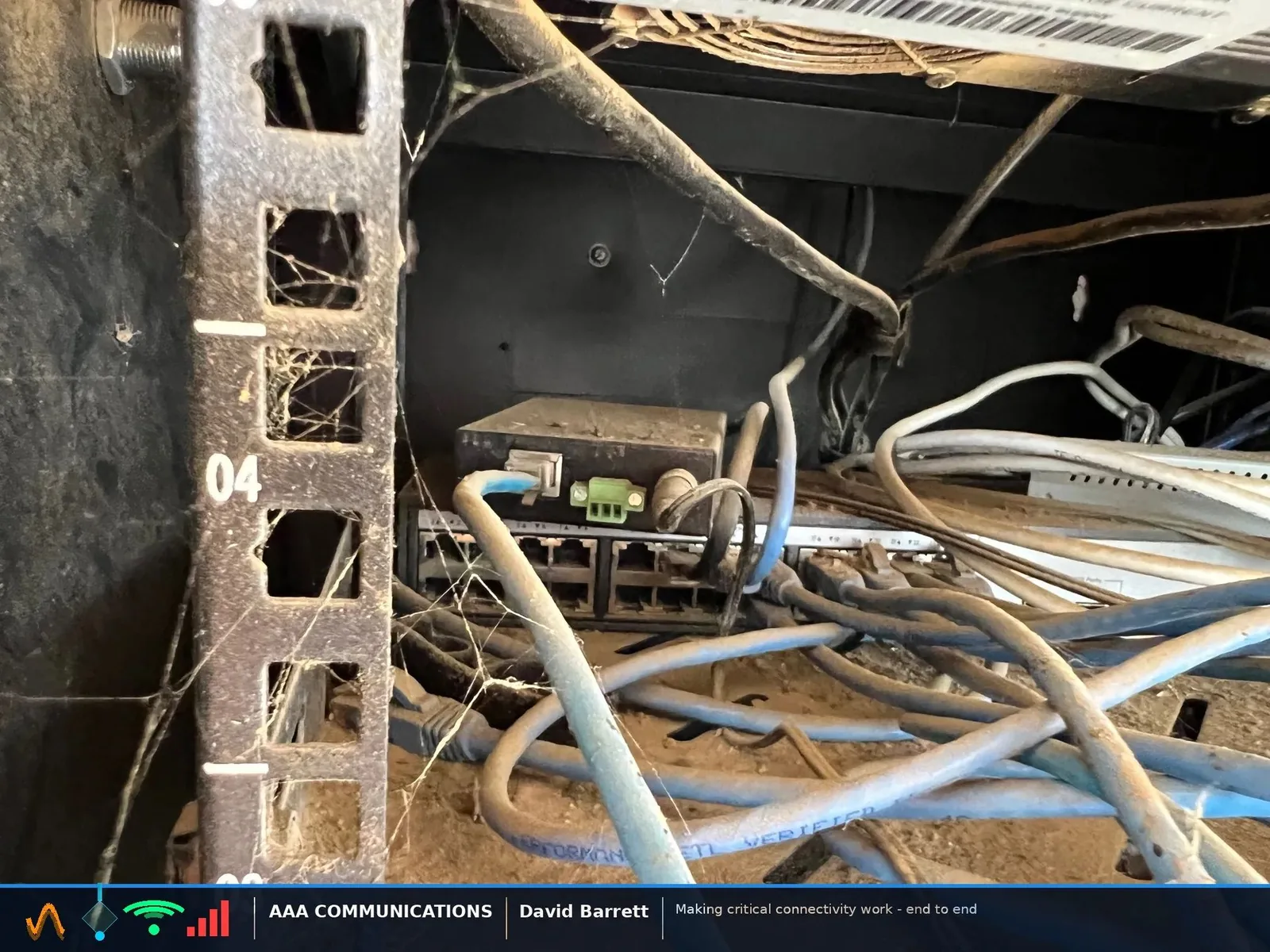
12 access points in 18 months. Two moved, complaints gone.
Four sites where nobody checked what was already there before adding more. Three of the four needed nothing more than a tape measure or a survey.
Read the full breakdown →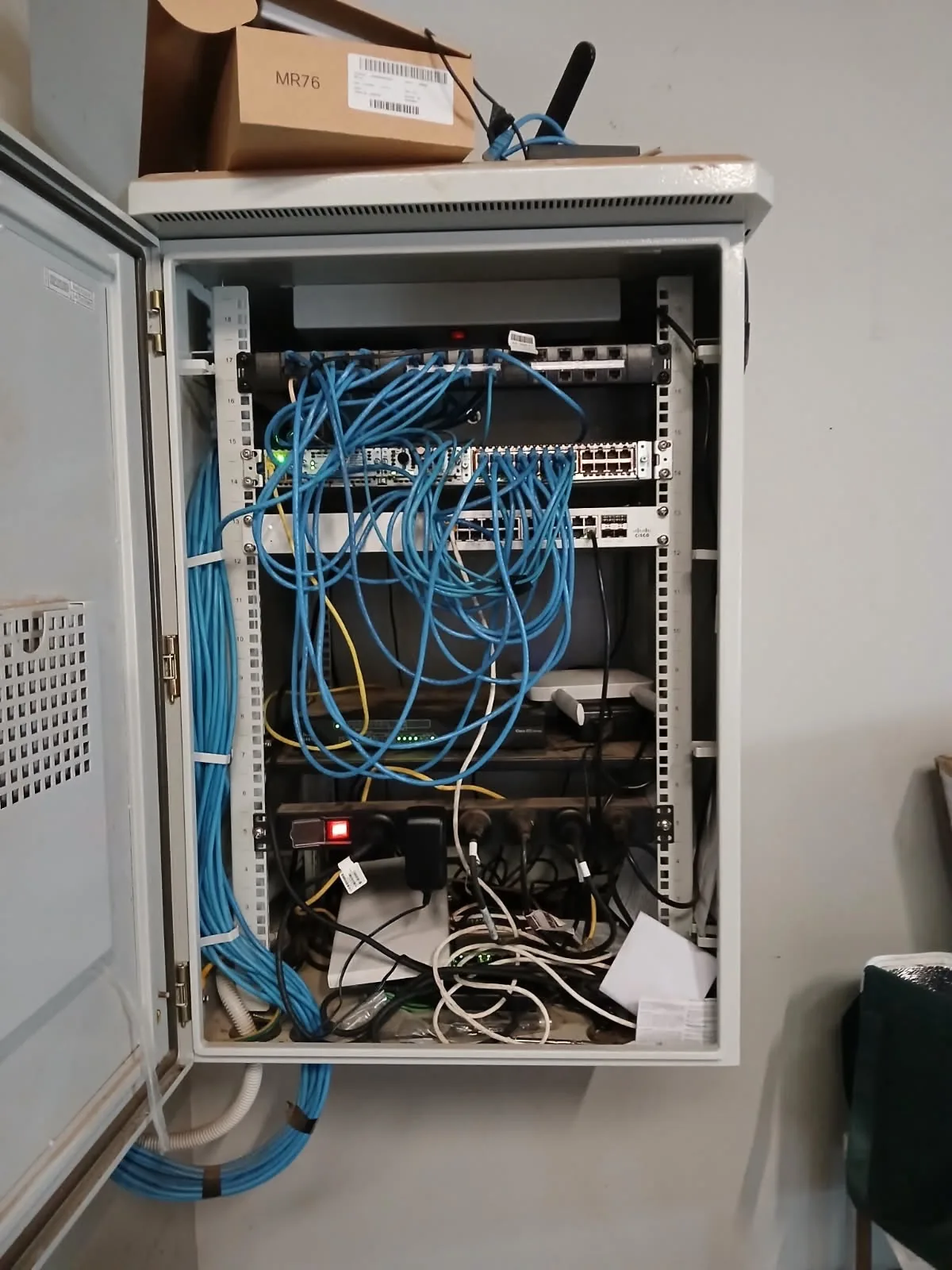
The access point nobody documented.
7,935 impressions. An AP on the network for a year, in nobody's design. How shadow IT actually happens, how the subnet gives it away, and why a rogue device looks identical to a convenience install.
Read the full breakdown →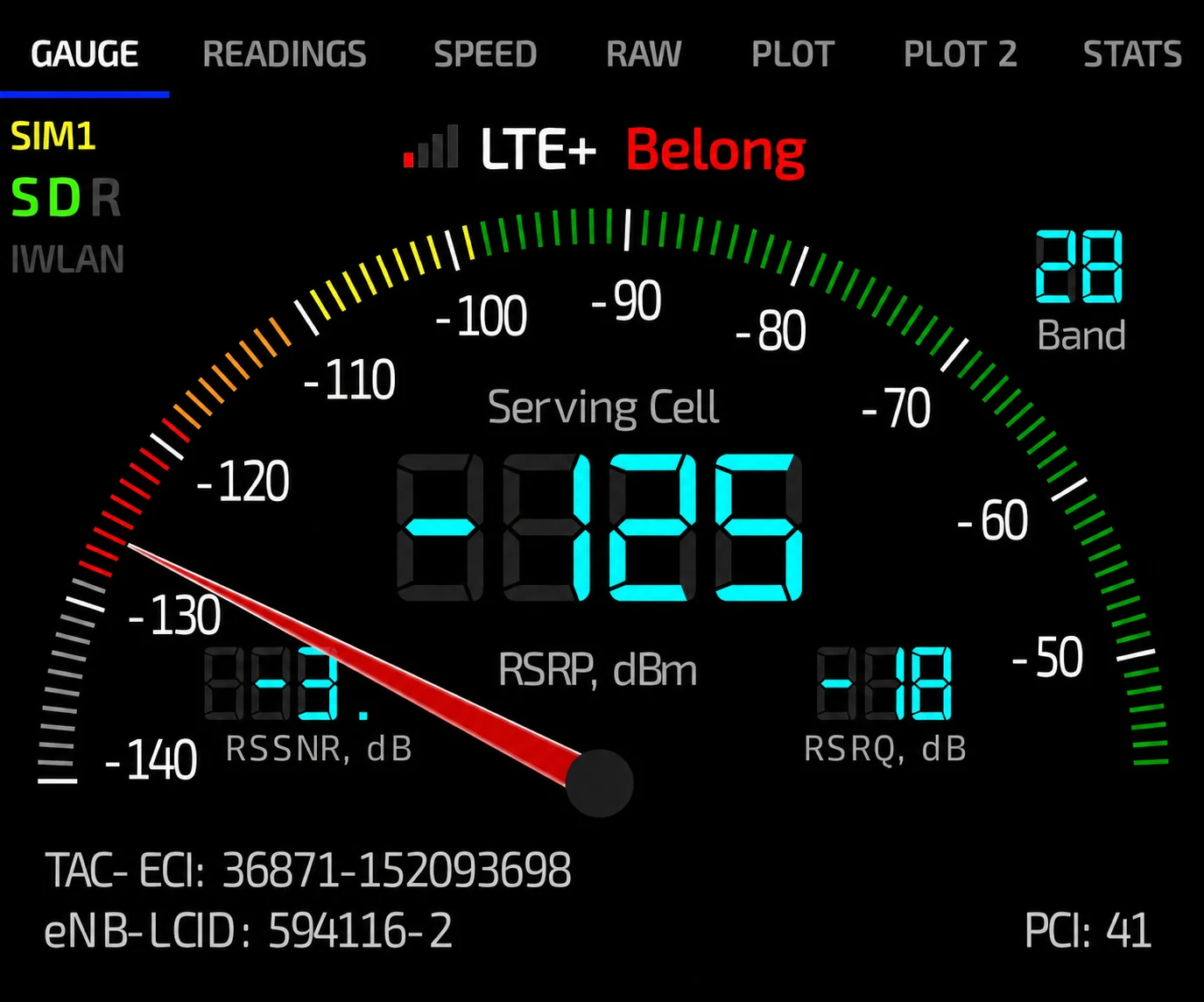
The survey that said no. And the 18-month problem it actually solved.
Indoor readings of -125 dBm RSRP, obstructed rooftop paths, and a root cause nobody expected. A WAP missing for 18 months, and why the survey fee was the cheapest line on the job.
Read the full breakdown →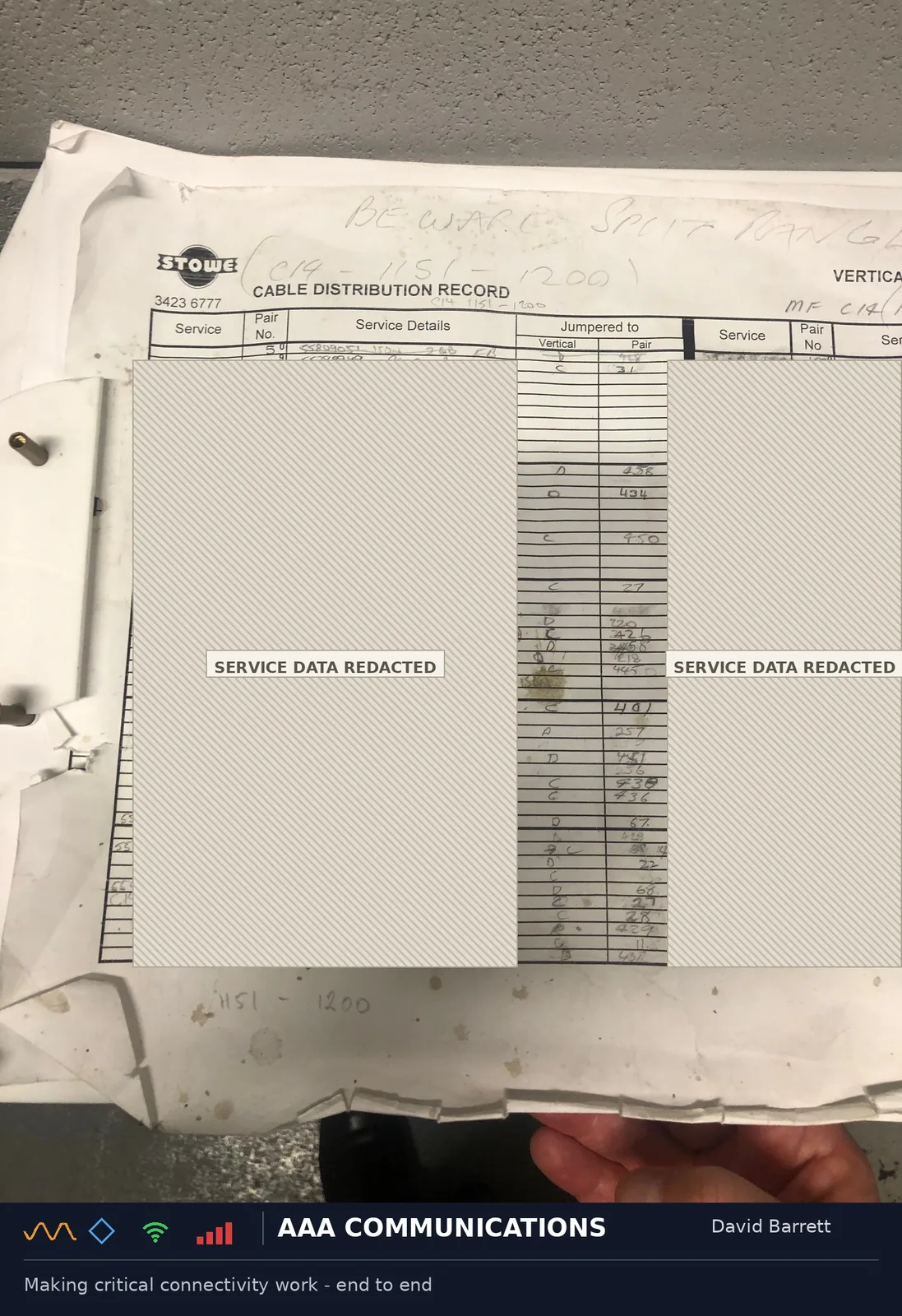
The spreadsheet was perfect. The network wasn't.
A cable audit that looked complete. Two of three cables checked on site were wrong. Why design intent and as-built documentation are not the same thing, and what closes the gap between them.
Read the full breakdown →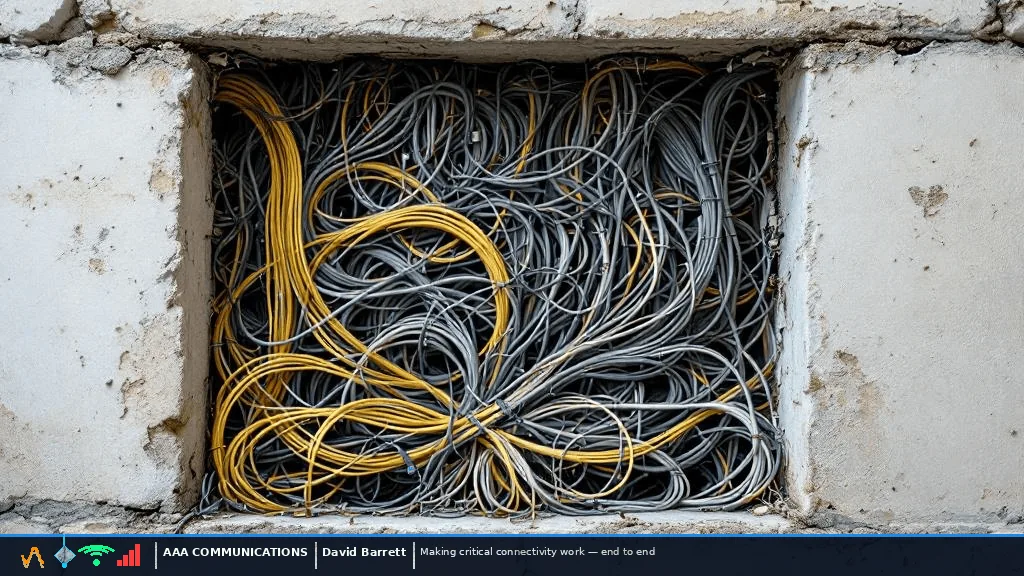
We opened the wall. Nobody documented what was inside.
106,195 impressions. Fourteen cable types. Four decades of undocumented installations. Cat3 painted grey. A code violation hidden since 2007.
Read the full breakdown →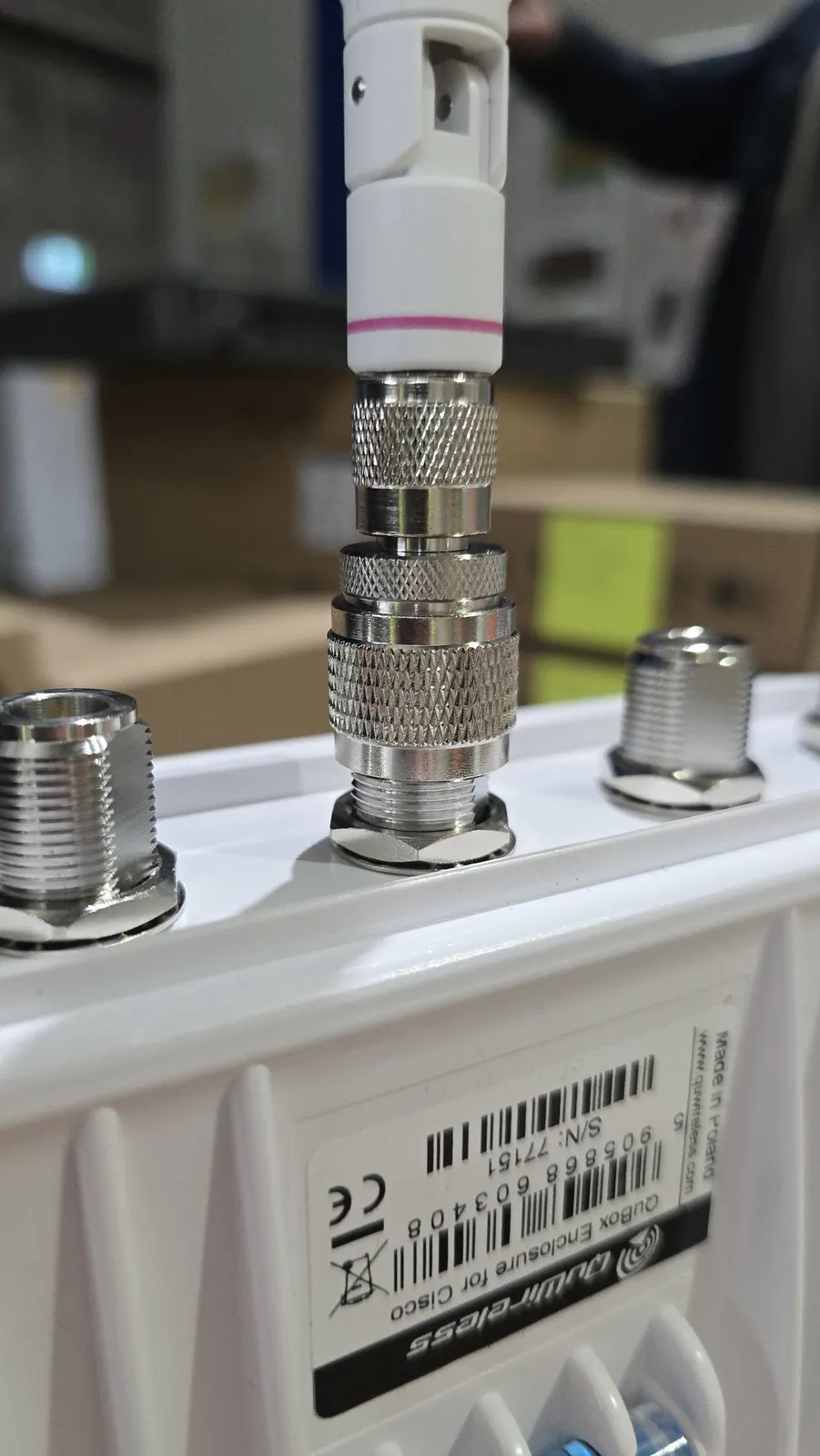
The Physical Thing That Breaks First
3,930 LinkedIn impressions, 21 comments from submarine cable engineers and fibre network principals. What a Pacific cable fault and a $30 connector have in common, and why your redundancy diagram doesn't cover either.
Read the full breakdown →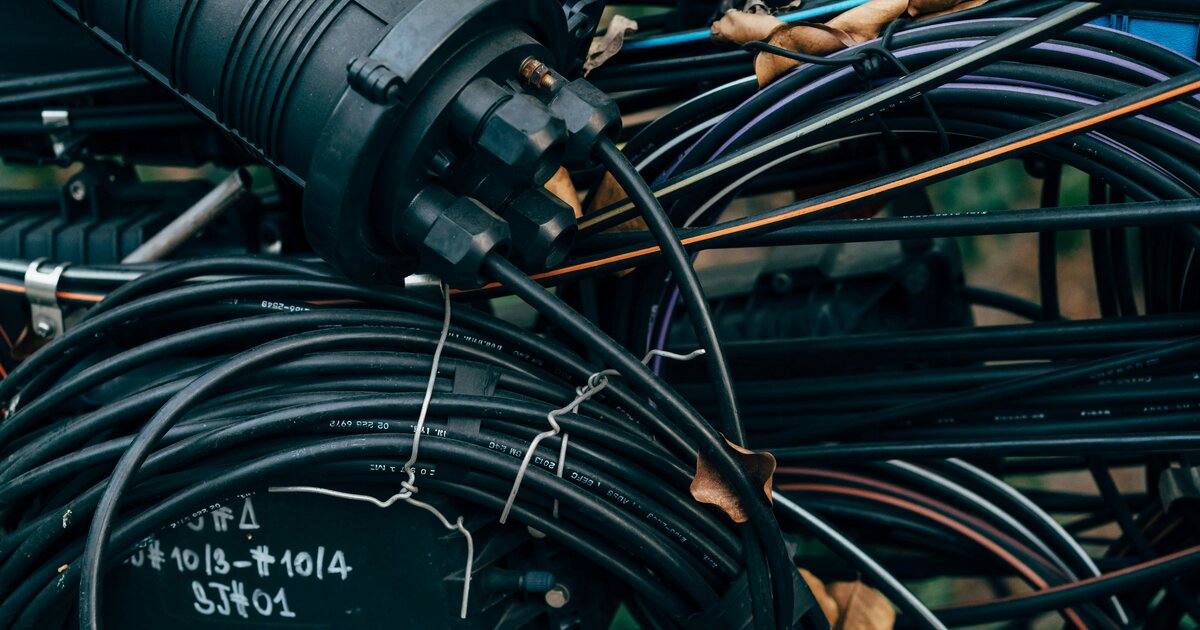
Route diversity: when both paths share the same trench.
25,046 impressions. One deliberate cut, 700 fibres spliced by hand, 911 dispatch degraded. A single point of failure wearing a costume.
Read the full breakdown →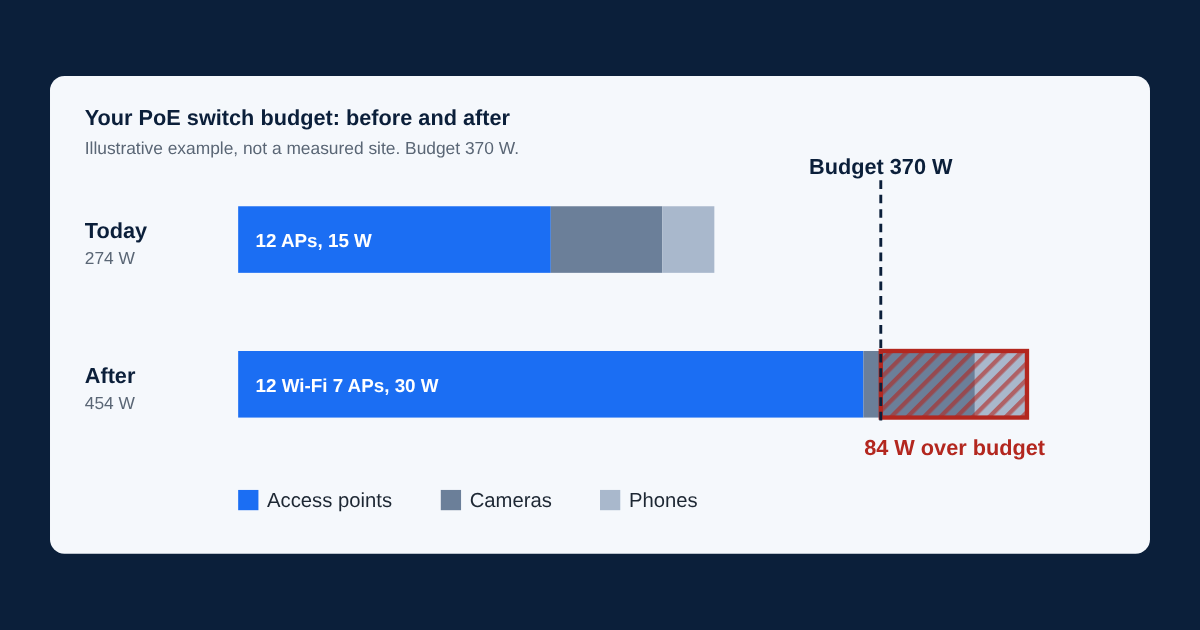
Your Wi-Fi 7 upgrade will fail quietly. The radio will take the blame.
9,000+ impressions. Many Wi-Fi 7 access points need PoE++ for full performance. The switch budget and patch leads sized for the old AP are where the upgrade quietly fails.
Read the full breakdown →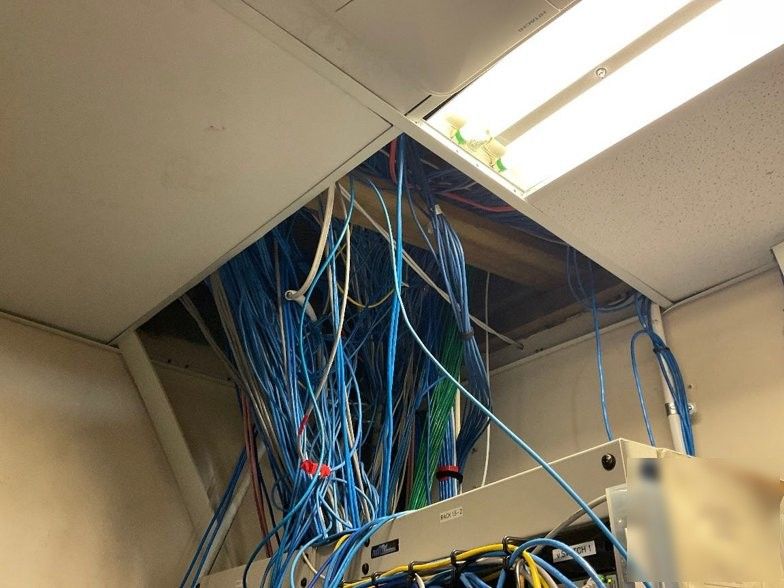
The AP got upgraded. The bottleneck moved into the wall.
66,944 impressions. Wi-Fi 6 APs ship with 2.5 Gbps uplinks. Most Cat5e was never rated for the aggregate load. The cable spec is the last thing anyone checks.
Read the full breakdown →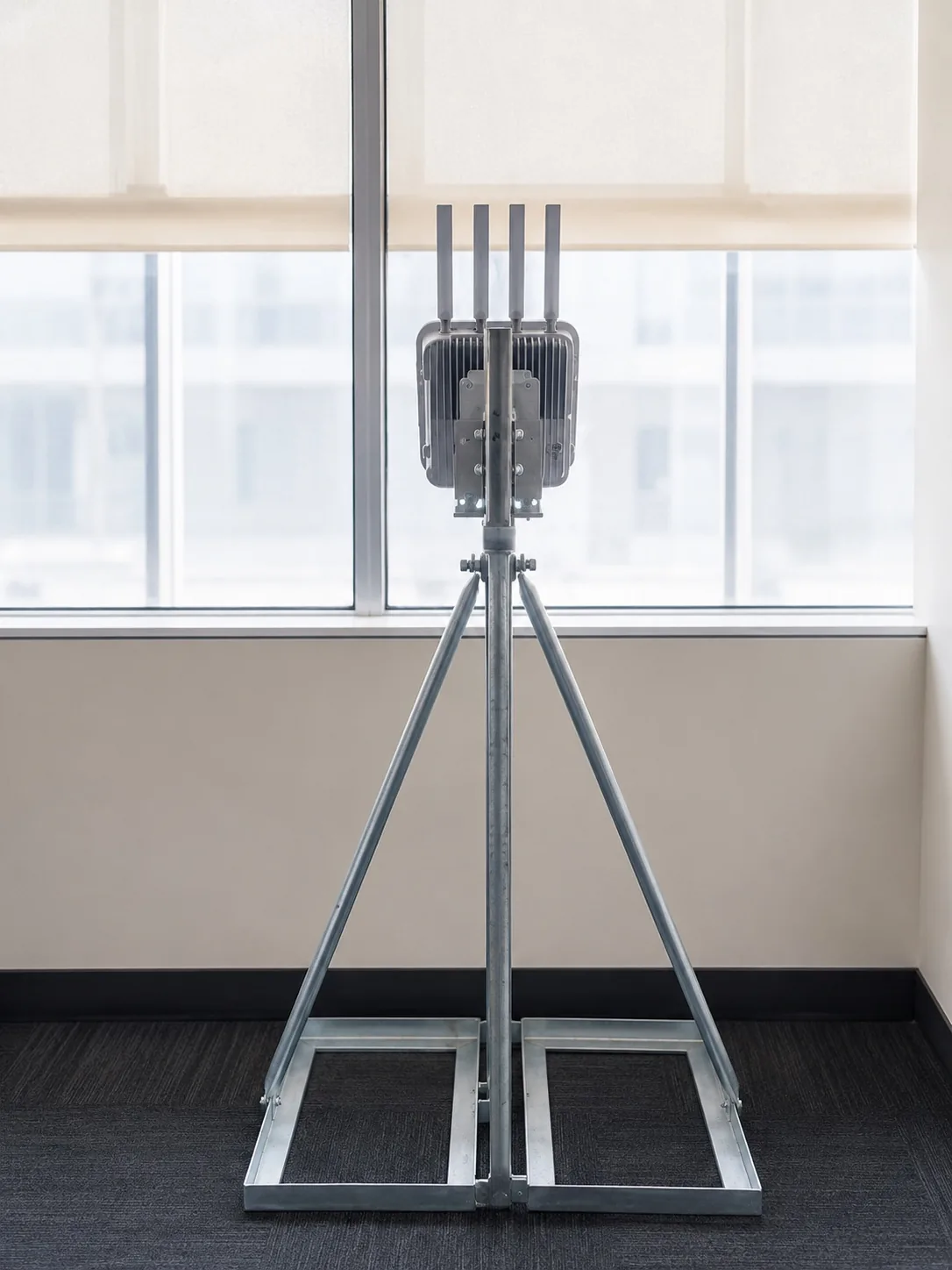
Your continuity plan has a 4G backup. Has it ever carried real load?
Wi-Fi and cellular are not automatic redundancy. The 4G path runs on Layer 1 too, and most of it sits above a ceiling tile nobody has inspected since install.
Read the full breakdown →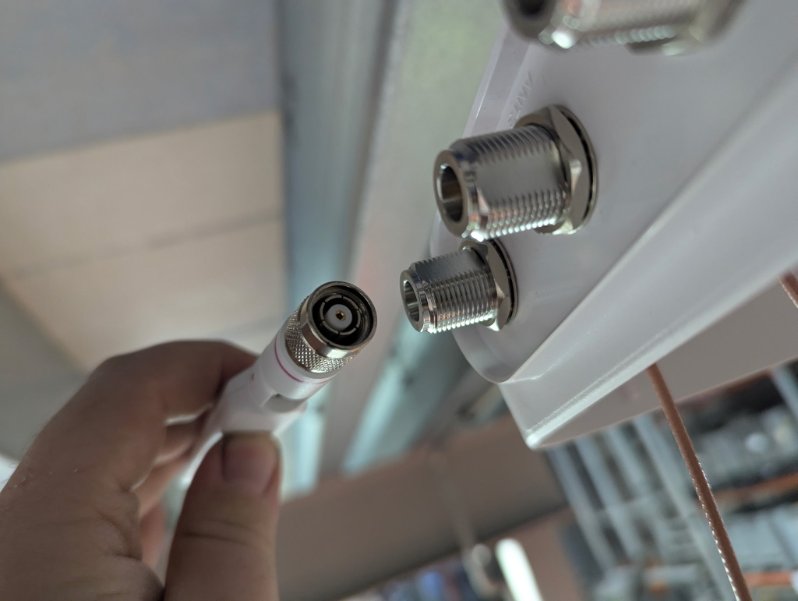
The connector you can't validate until site day.
Cisco specifies RP-TNC. Industrial enclosures specify N-type. Both are correct, and neither will tell you they don't mate until the equipment meets on site. A Melbourne case study in interface risk.
Read the full breakdown →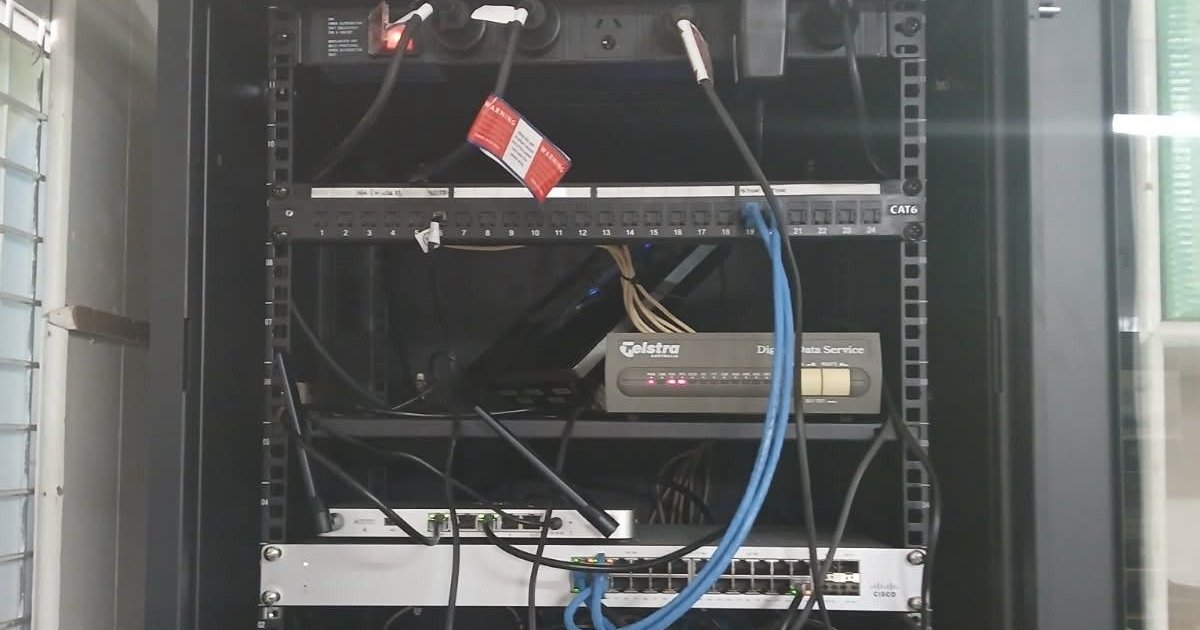
The cabinet nobody owns. Carrier responsibility stops at the NTU. Who owns everything after it?
20,084 impressions. The 4-step ownership audit that puts a name against every device, cable and carrier handoff in your cabinet, before an outage does it for you.
Read the full breakdown →
Your network passed acceptance in 2017. The load it carries now is not the load it passed on.
20,847 impressions. The acceptance test proved your network could carry 2017's load. The PoE budget is the first thing to break quietly, and nothing alerts you when it does.
Read the full breakdown →
Network documentation audits: when the comms room knowledge walks out.
11,301 impressions. The person who knew what every cable did left three years ago. Why a physical audit is the only way to rebuild what the handover never captured.
Read the full breakdown →
Your cabling passed inspection. The network still drops every Tuesday.
12,309 impressions. The gap between a compliance certificate and a performance certificate, and what it costs when nobody asks the question.
Read the full breakdown →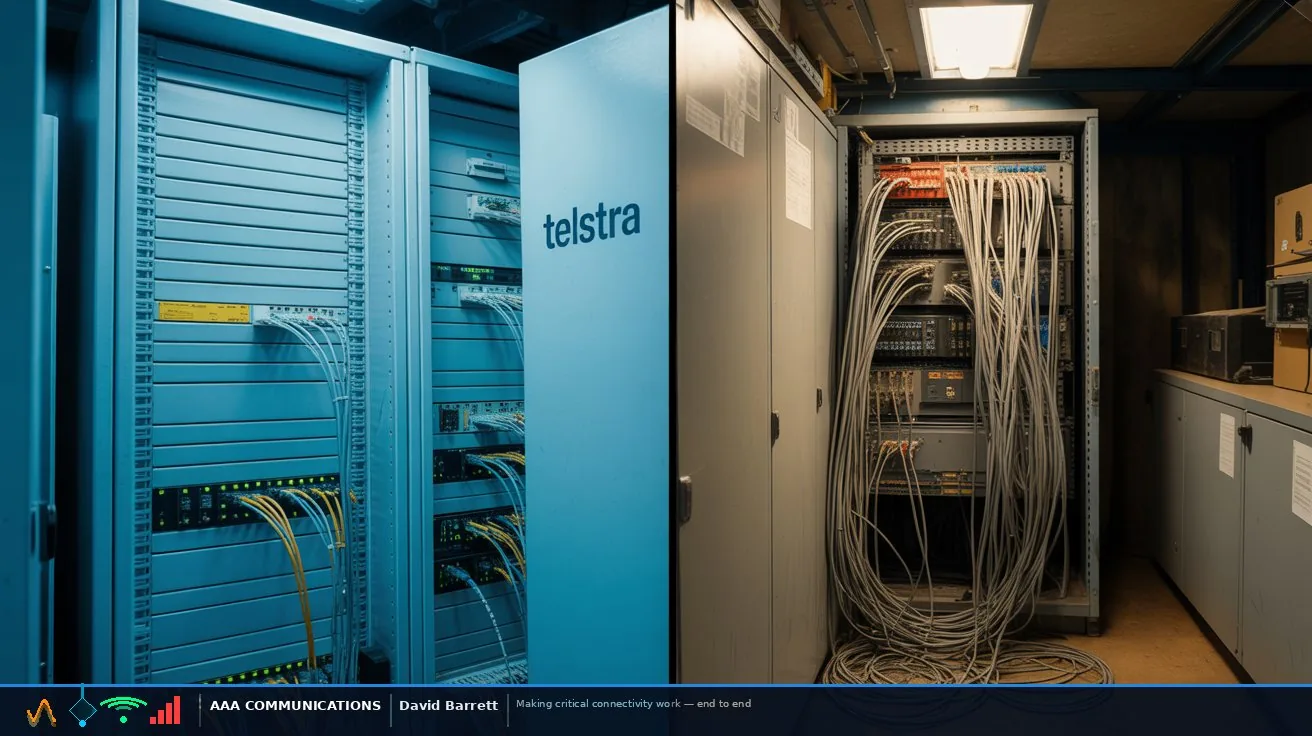
Your Telstra service is fine. Your internal cabling isn't.
17,951 impressions. One inconvenient truth. The gap between what Telstra delivers and what reaches your team is where most connectivity problems live.
Read the full breakdown →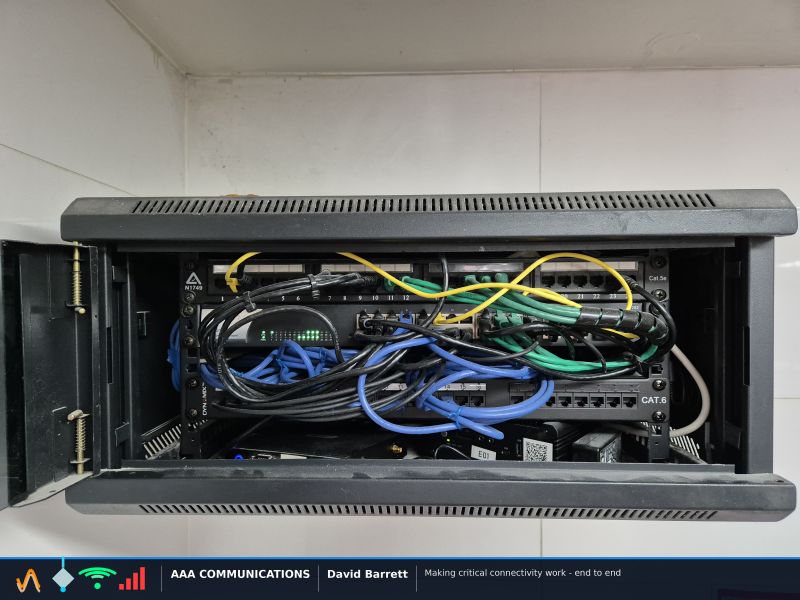
Who owns the risk in that cabinet?
11,163 impressions. ACMA registration says who can legally do cabling work. It never says who owns the risk left behind.
Read the full breakdown →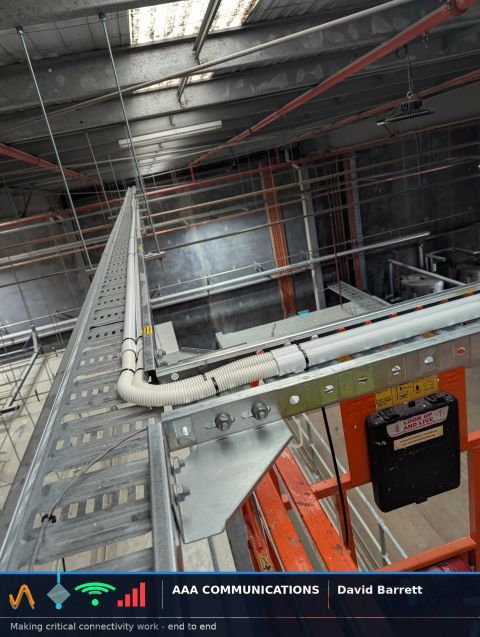
Your warehouse was built for automation. The cabling wasn't.
9,948 impressions. Warehouses are being built for automation faster than the cabling beneath them was designed for.
Read the full breakdown →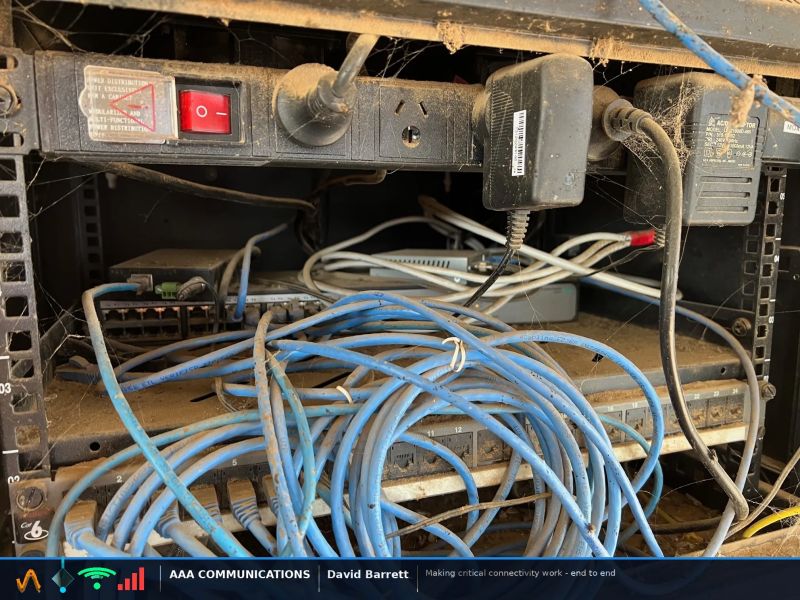
The rack that runs too hot to notice
A cable bundle blocking a switch's intake vents pushes equipment temperature toward the edge of its safe range, and holds it there until something fails.
Read the full breakdown →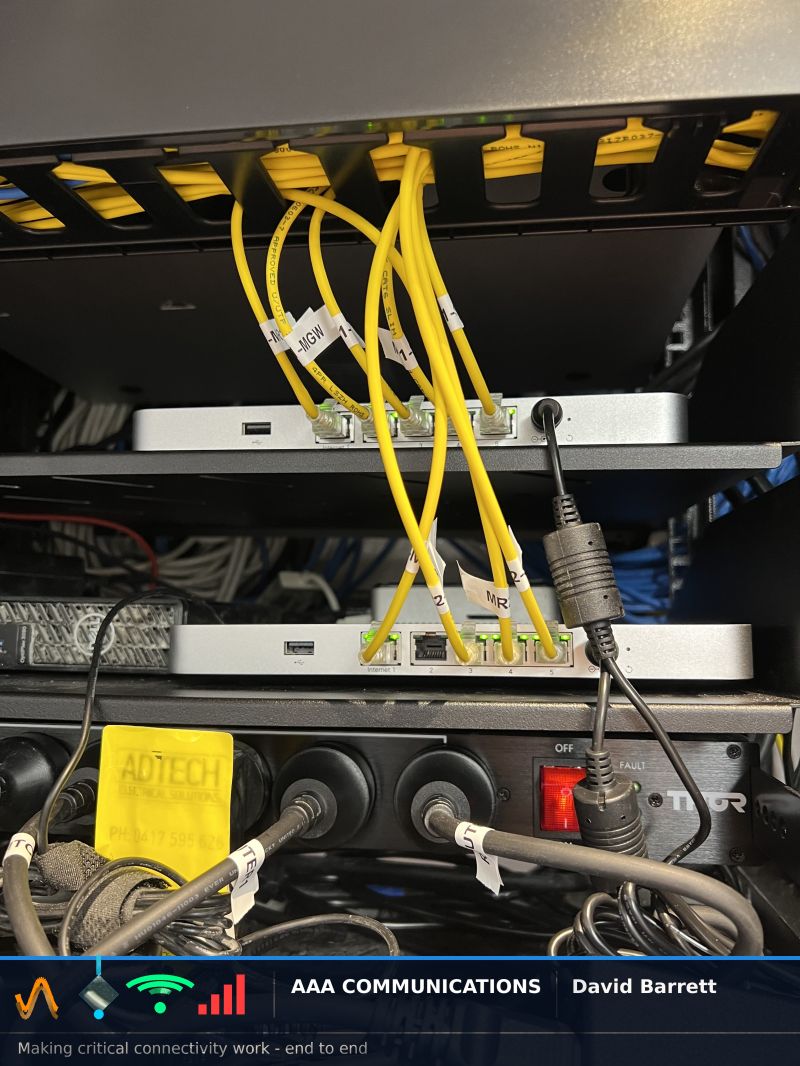
Your redundant network has never actually failed over.
Dual-gateway SD-WAN failover proves the control plane works. It doesn't prove the physical channel underneath was ever tested under real load.
Read the full breakdown →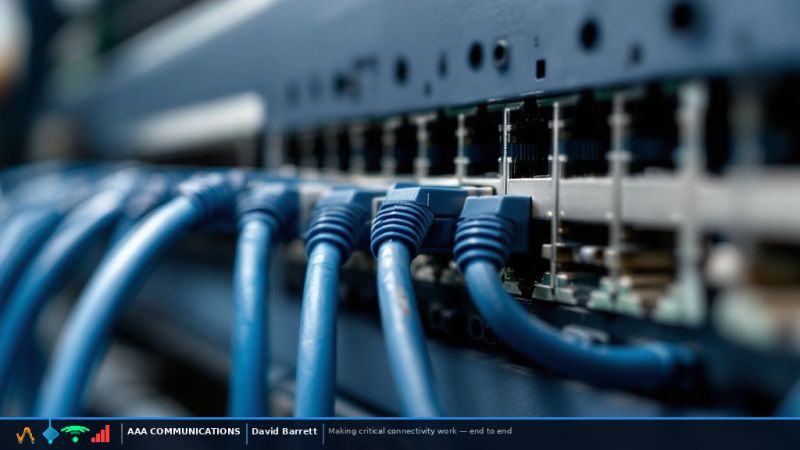
The last three metres.
5,005 impressions. Your Cisco switches are enterprise grade. Your patch cables are from the fit-out. The performance gap lives in the last three metres.
Read the full breakdown →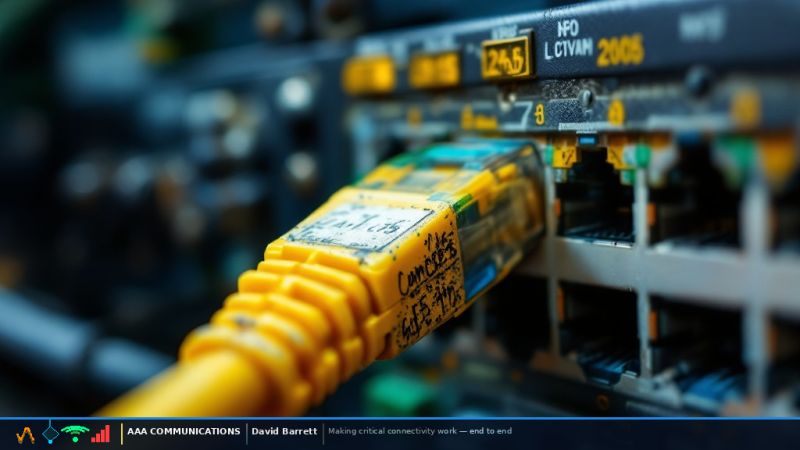
The same PoE switch.
8,068 impressions. Your security cameras, access control, and VoIP all run on the same PoE switch. That switch is eight years old. When it fails, you lose everything at once.
Read the full breakdown →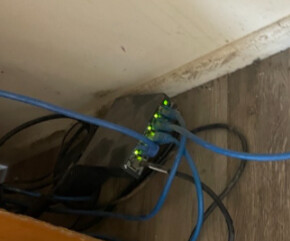
The switch nobody knows about.
7,997 impressions. Your network security is comprehensive. Except for the unmanaged switch under Sarah's desk that's not on any diagram and your firewall can't touch.
Read the full breakdown →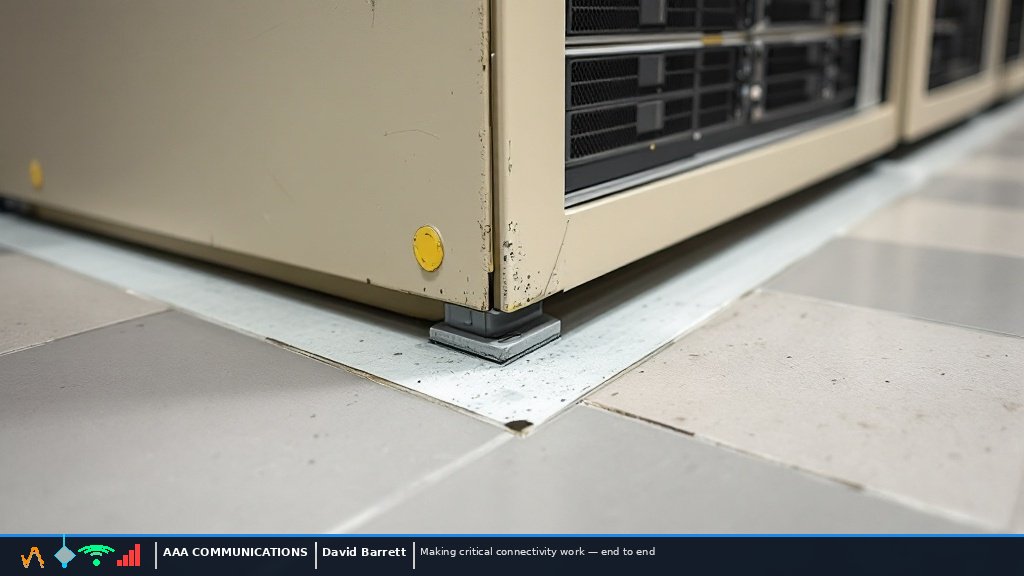
Your rack has a weight rating. So does the floor.
12,726 impressions. Rack ratings say nothing about the floor beneath them. GPU-era density, Australian WHS duties and undocumented floor ratings make comms room loading a Layer 1 risk.
Read the full breakdown →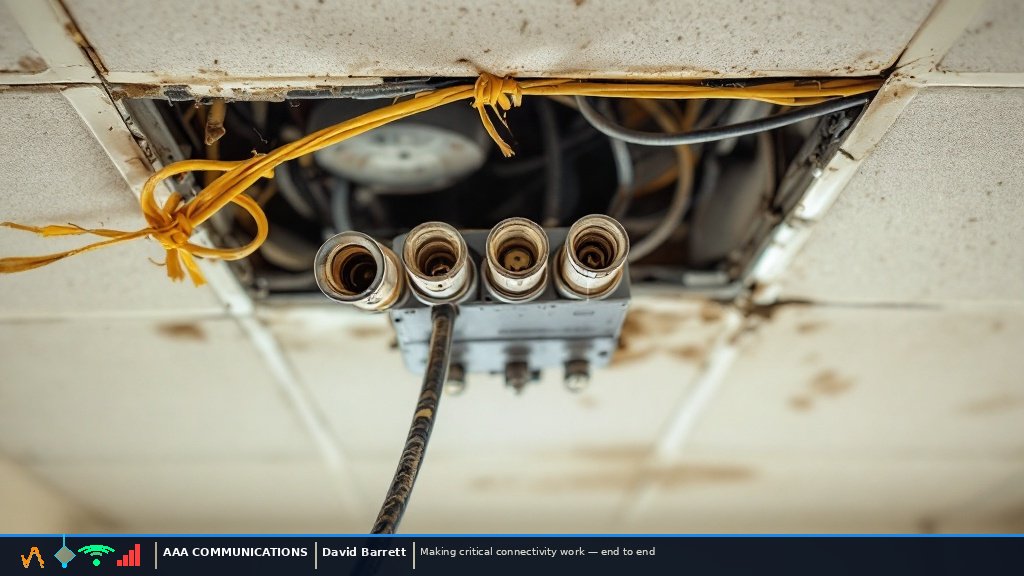
Have you tested your 4G backup assumption?
10,239 impressions. Wi-Fi and cellular use different spectrum, antennas and propagation. Treating one as backup for the other without validating both is planning for redundancy that may not exist.
Read the full breakdown →
What Layer 1 testing and certification actually involves.
Why the physical layer is the most failure-prone part of the network stack, and what tested and certified evidence looks like in brownfield environments.
Read the full breakdown →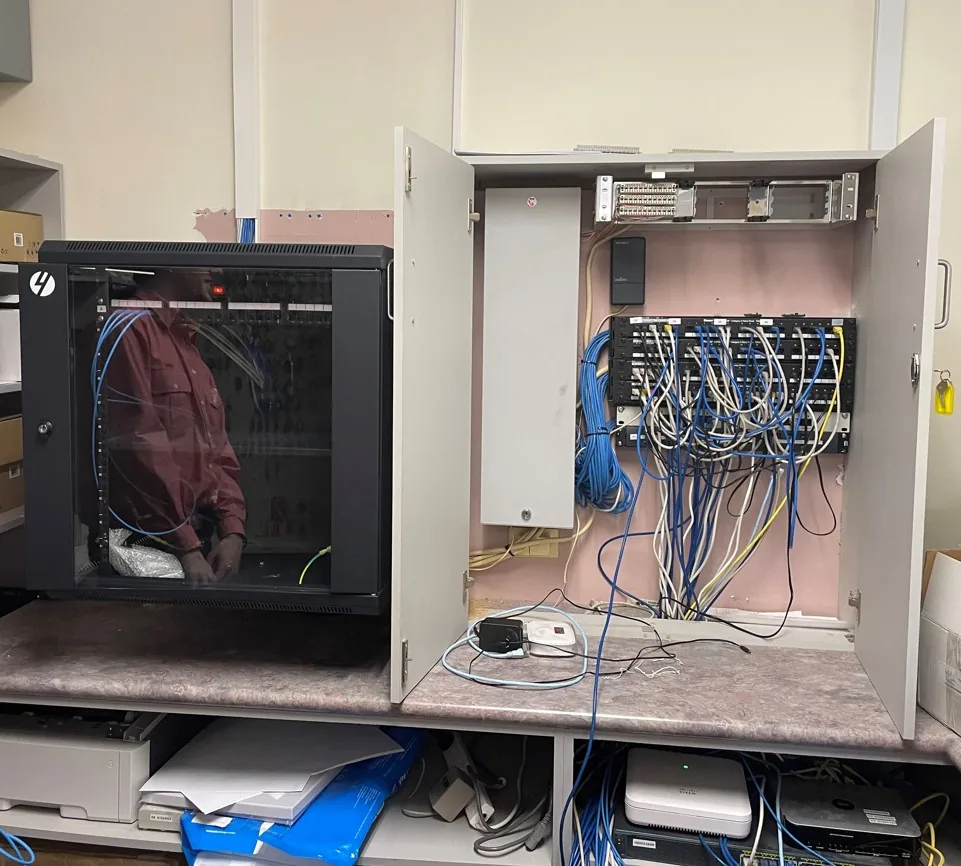
Enterprise structured cabling in brownfield environments.
Most enterprise cabling problems aren't new installations. They're inherited. What brownfield remediation actually involves and why documentation is as important as the cable.
Read the full breakdown →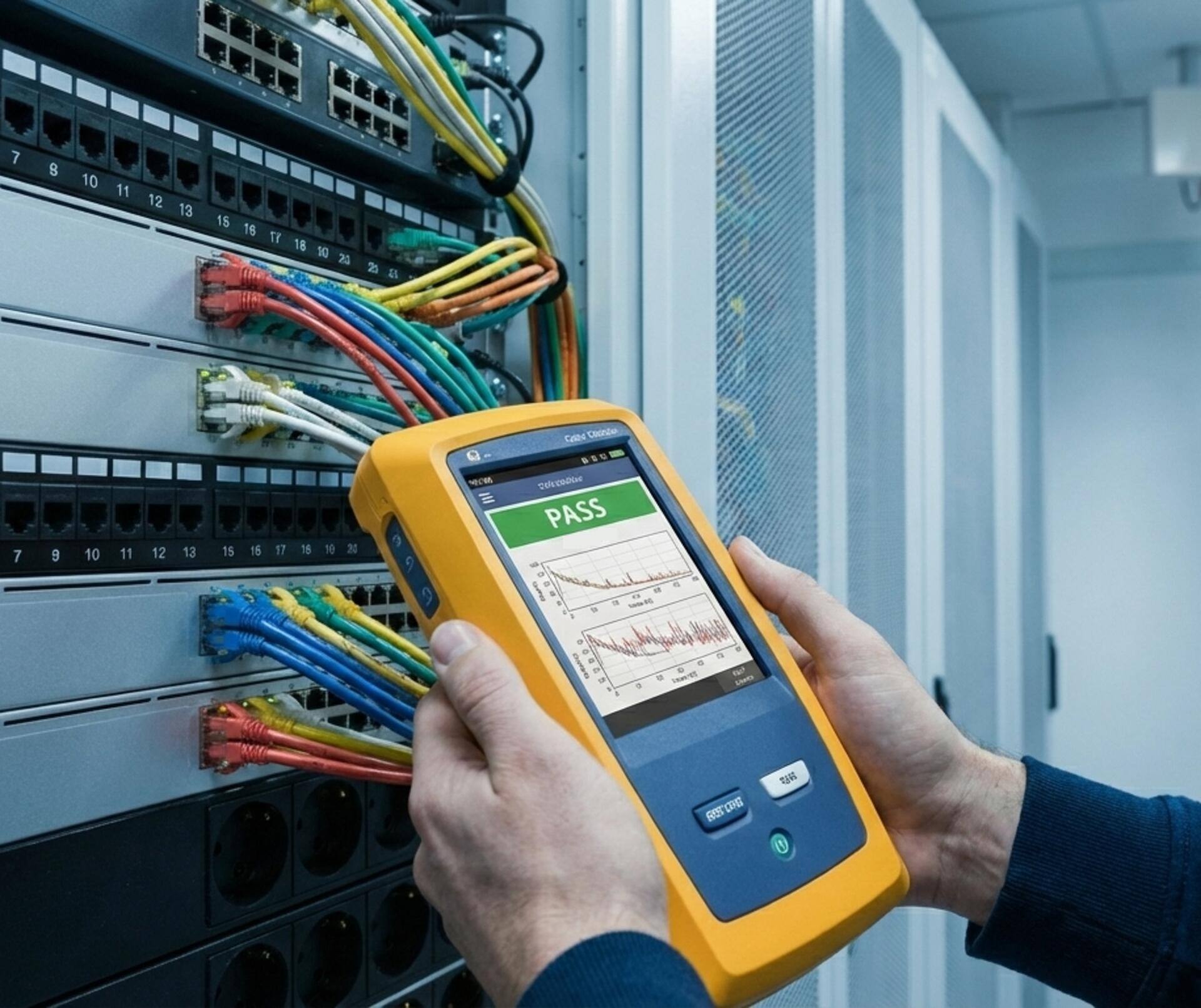
OTDR testing, audits and certification.
Why OTDR certification isn't optional on fibre runs, what the test report actually tells you, and what an audit catches that a visual inspection misses entirely.
Read the full breakdown →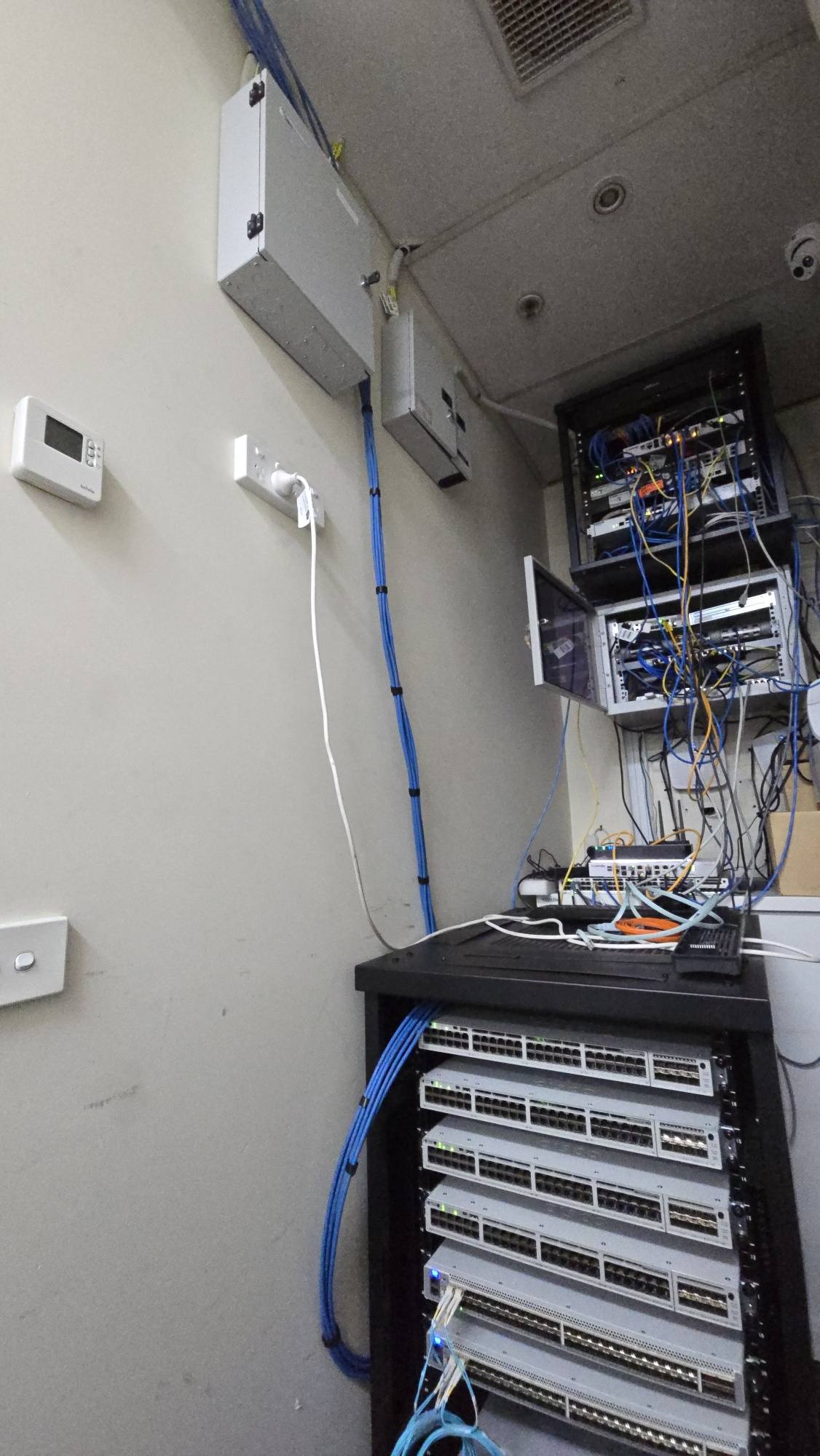
Physical network constraints on cyber resilience.
Your cyber resilience posture is only as strong as the physical infrastructure it runs on. The constraints most security assessments never look at.
Read the full breakdown →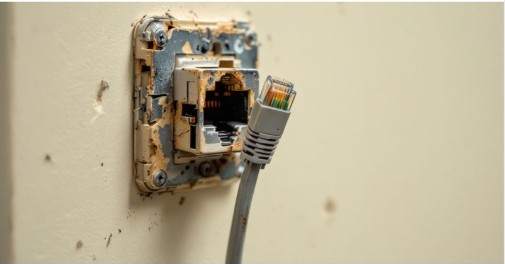
Structured cabling recertification: what changes and when it matters.
Cabling that passed certification five years ago may not pass today's standards under today's load. What triggers a recertification requirement and what the process uncovers.
Read the full breakdown →
In-building mobile vs Wi-Fi: they are not the same problem.
Same building, different physics, different failure modes, different fixes. Why treating cellular coverage and Wi-Fi coverage as equivalent problems produces the wrong solution for both.
Read the full breakdown →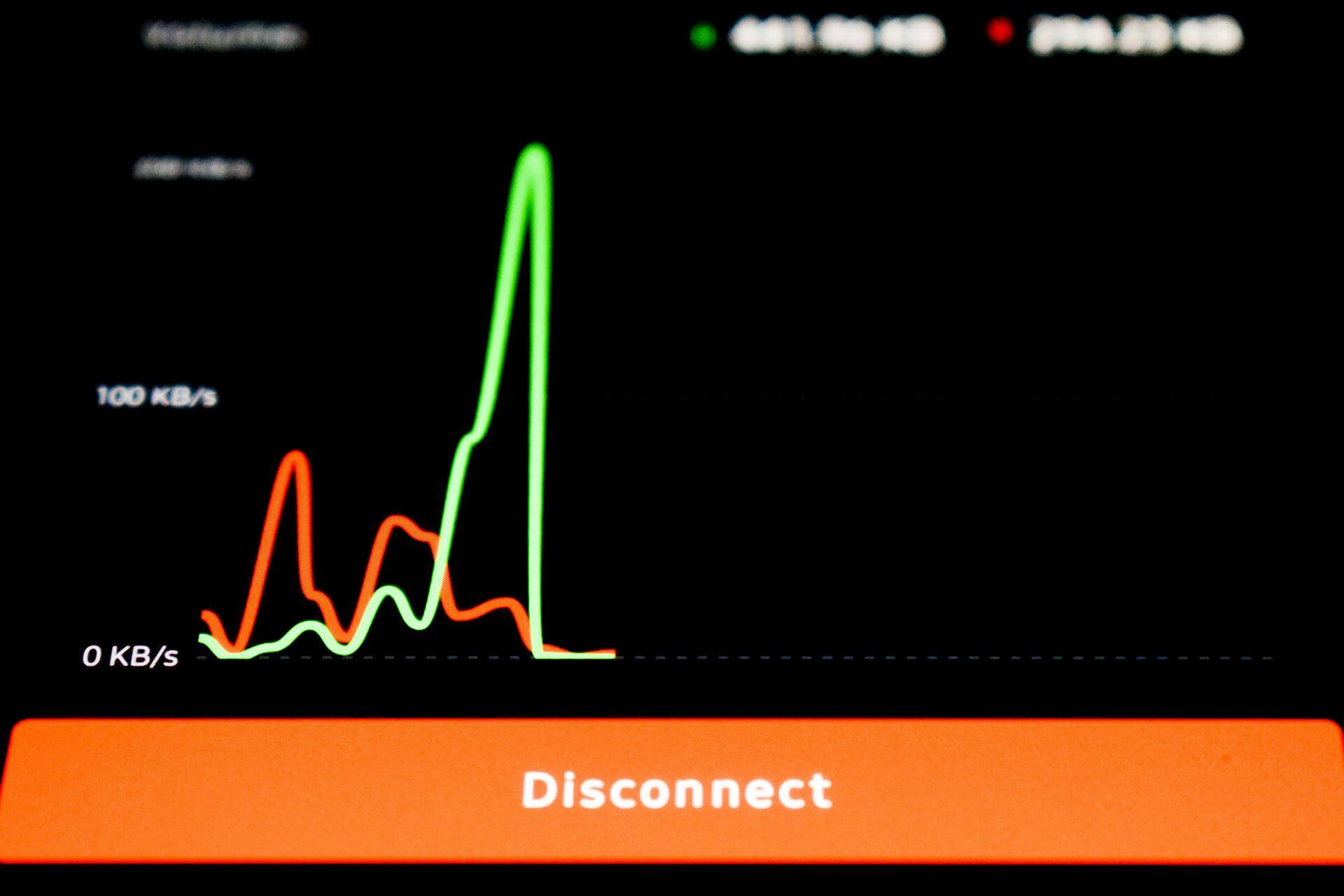
Why Wi-Fi fails in modern buildings. It's not the AP.
Low-E glass, dense concrete, open-plan layouts and IoT density all conspire against a clean RF environment. The building itself is the variable most Wi-Fi deployments don't account for.
Read the full breakdown →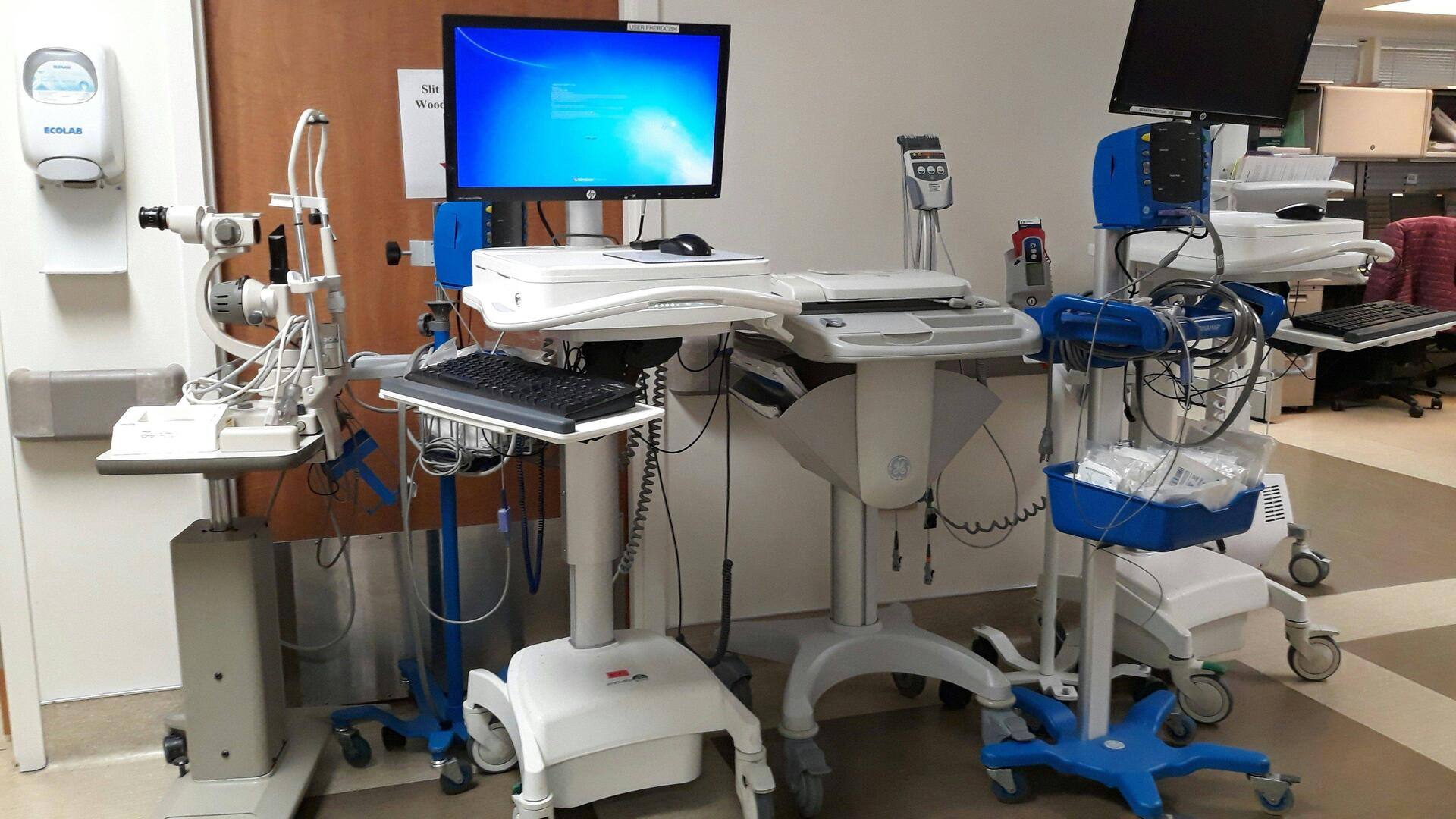
Clinical Wi-Fi and RF risk in hospital environments.
Hospitals run life-critical devices on wireless infrastructure. The RF risks that standard enterprise Wi-Fi design doesn't account for, and the compliance obligations that come with clinical environments.
Read the full breakdown →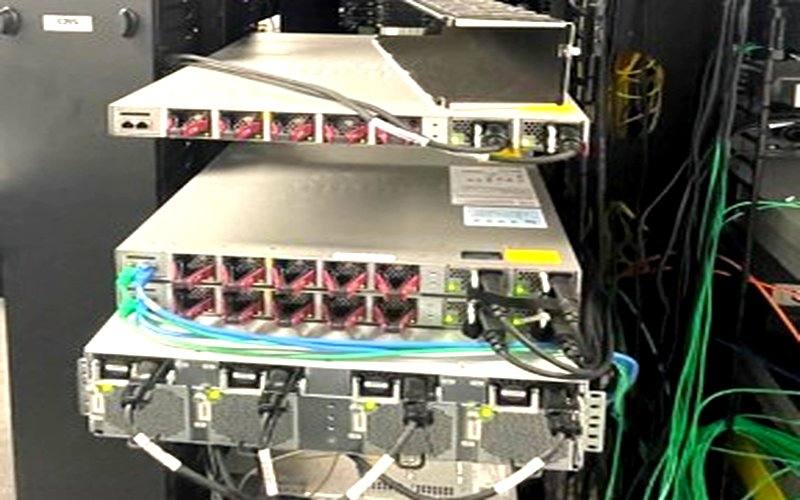
Hospital network infrastructure: where uptime is a clinical requirement.
In health environments, network downtime is a patient safety issue. What the infrastructure requirements look like when you move from enterprise-grade to clinical-grade.
Read the full breakdown →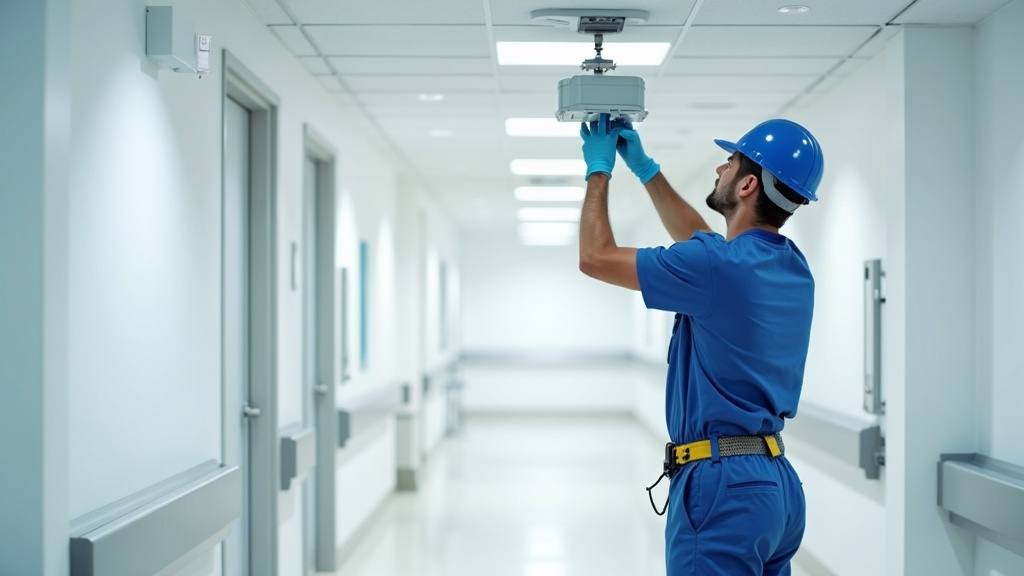
In-building 4G/5G for critical facilities: coverage you can't assume.
Emergency services, staff communications and IoT all depend on in-building cellular. Why macro coverage outside the building tells you nothing about what reaches the basement, the plant room, or the operating theatre.
Read the full breakdown →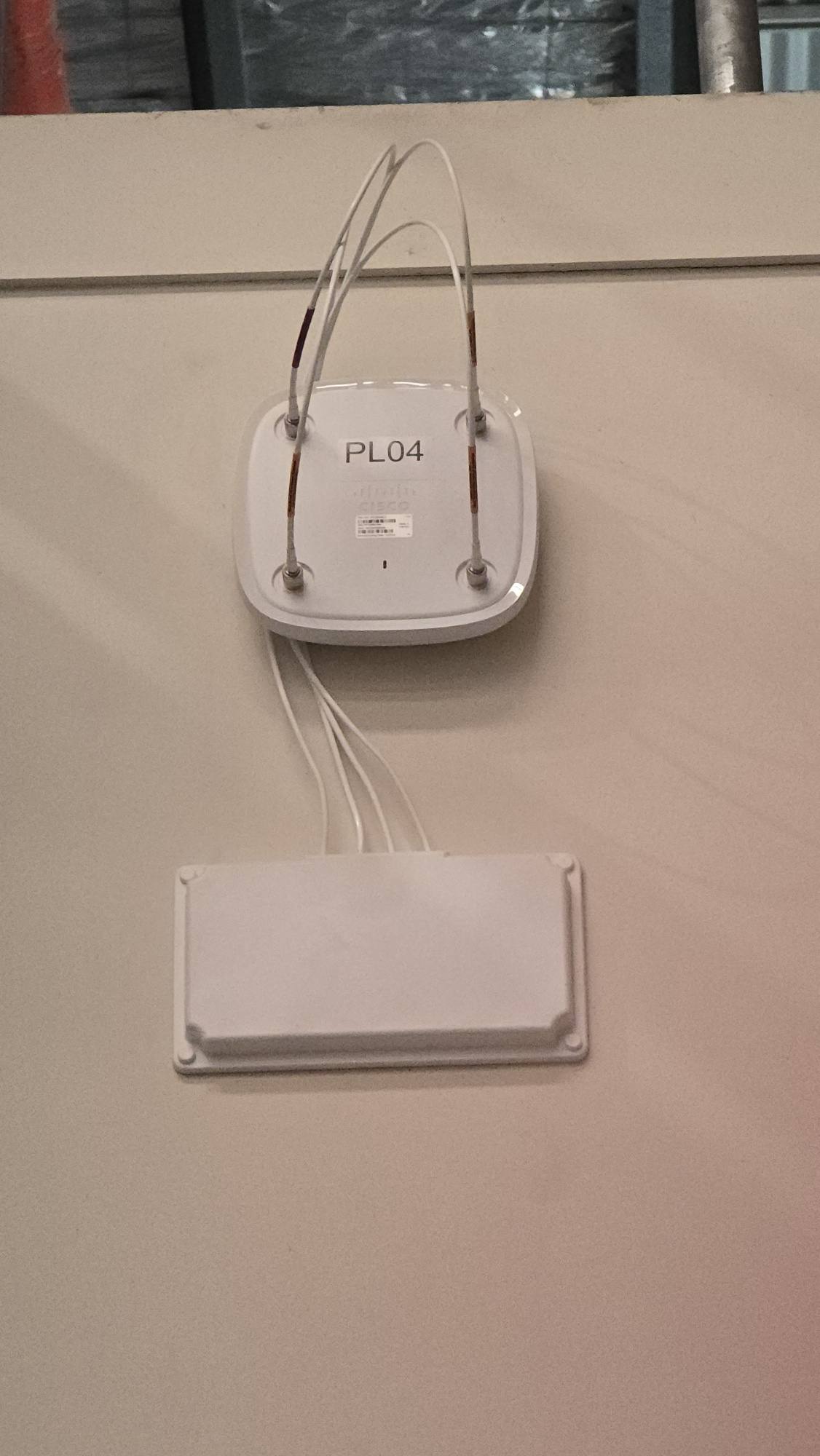
Wi-Fi installation: what a proper enterprise deployment actually involves.
Consumer thinking in an enterprise environment produces consumer results. The difference between placing APs and designing a wireless network, and why the planning phase determines the outcome.
Read the full breakdown →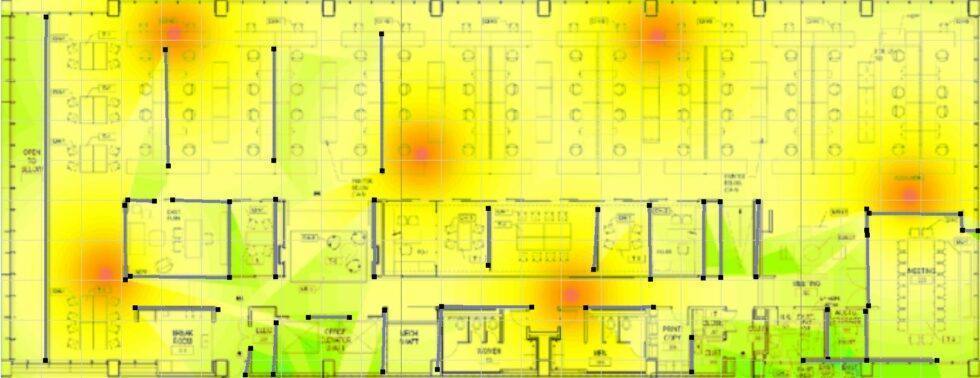
Wi-Fi survey and RF validation: what the report has to show.
A Wi-Fi survey without validation data is a walk-through with a laptop. What a properly conducted RF survey captures, what it proves, and what it tells you about the next three years of wireless performance.
Read the full breakdown →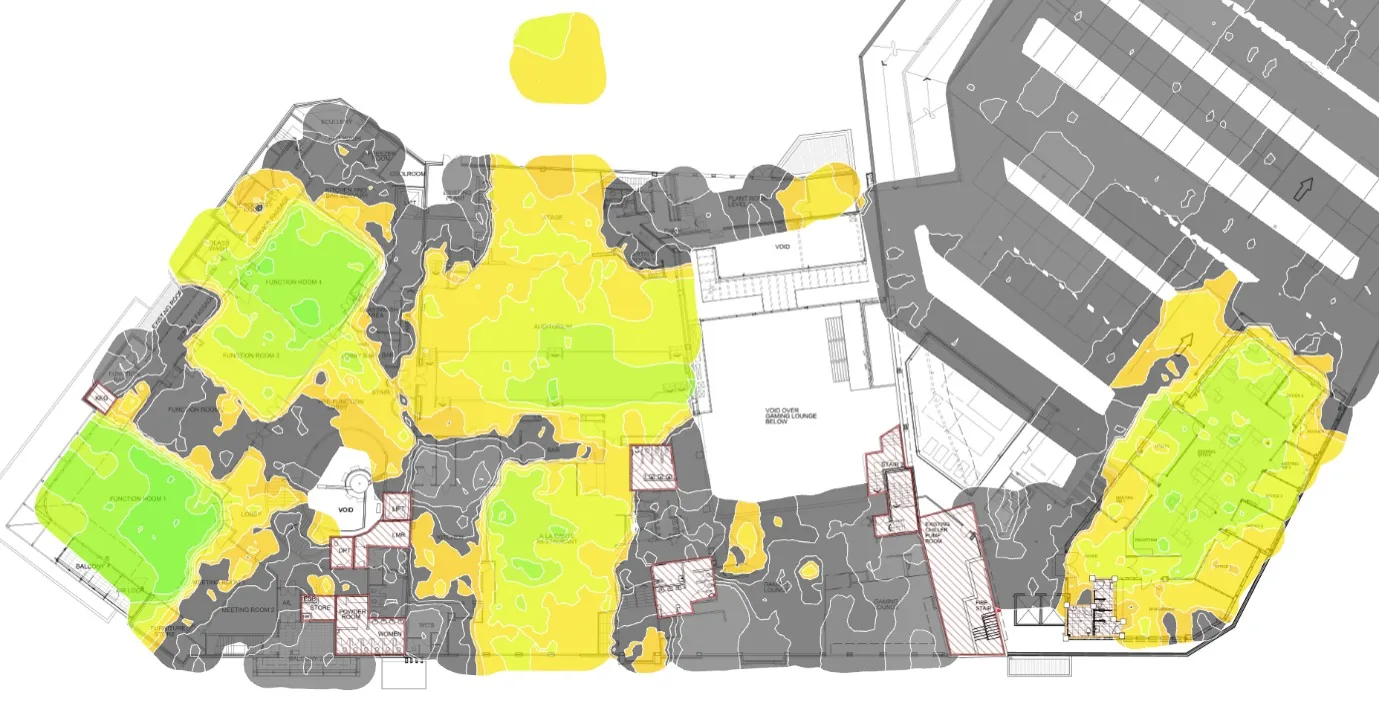
The gym had zero bars, so we gave it Wi-Fi instead.
A Sydney leagues club's Wi-Fi hadn't kept up with three floors of renovations. What a full RF survey found, and why Wi-Fi calling, not a bigger booster, solved a below-ground dead zone.
Read the full breakdown →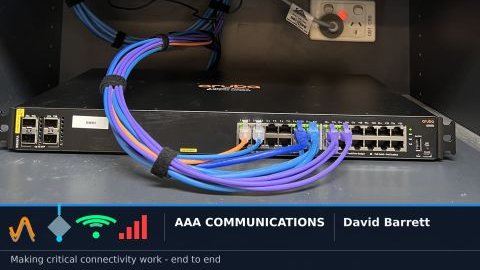
Aruba 2530 Replacement: Will the New Switch Fit?
EIA-310 fixes rack width, unit height and hole spacing. Not depth. Get a free 3-photo cabinet check before your Aruba 2530 refresh order goes in.
Read the full breakdown →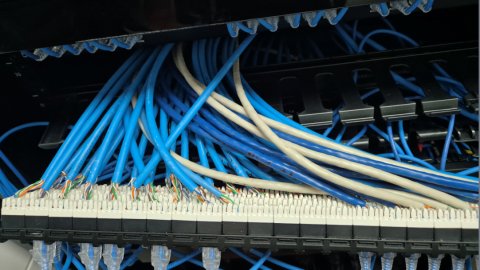
Patch Panel Strain Relief: Why One Fix Drops Three Services
One port repair dropped three services: no strain relief bar, no locked castors. Why Cat6A makes it worse, plus a free same-day cabinet check.
Read the full breakdown →