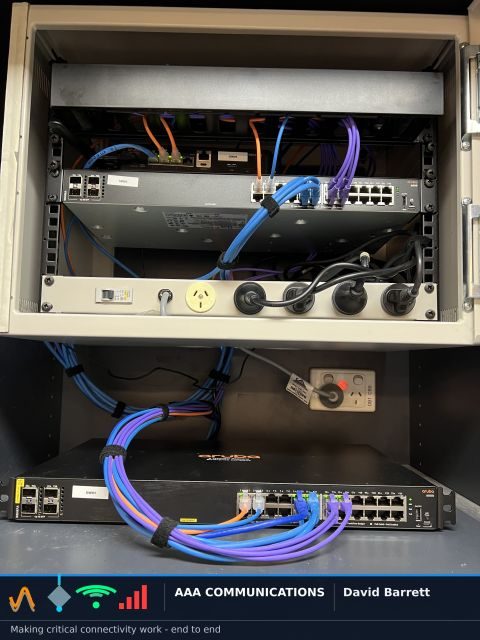
Not guaranteed, even from the same vendor. EIA-310 fixes three dimensions: the 19-inch mounting width, the rack unit height and the hole spacing. Depth, airflow direction and mounting post position are left to the manufacturer. A compliant switch can still fail to fit a compliant cabinet, so measure before you order.
Three things: the 19-inch mounting width, the rack unit height of 1.75 inches (44.45 mm), and the hole spacing. That's it.
Depth, clearance, airflow direction and mounting post position are all left to the manufacturer. Two compliant cabinets can look nothing alike. Two compliant switches from the same vendor lineage can end up incompatible with the same rack, five years apart.
On a lot of the sites we get called into, the cabinets were specified a decade ago for a different generation of hardware, and the mounting posts are adjustable. Adjustable means the usable depth was never actually fixed. It only gets confirmed when someone puts a tape measure on it.
Because "recommended replacement" in a vendor end-of-sale notice means feature and port equivalence, not physical equivalence.
HPE names the CX 6000 as the recommended replacement for the 2530. It runs AOS-CX, a different operating system from the ProVision-based AOS-S the 2530 runs. None of that tells you anything about depth, airflow direction or where the mounting ears sit on the new chassis.
HPE ended sales of the 2530 Gigabit models on 31 October 2021. Support end dates are listed per part number in HPE's warranty reference, so check yours by SKU, not by family. Entry-level access switches like the 2530 tend to live in the smallest cabinets on the network: wall-mounted comms cabinets in branches, clinics and retail sites, where usable depth is tightest.
It looks like a new switch sitting outside the cabinet it was bought for.
Refresh projects get treated as a procurement event. Order the switch, decommission the old one, slot in the new. Nobody measures the cabinet first. On one of our jobs, the new switch sat on a trolley for four days because nobody checked post depth until decommission day. The PO was already closed out.
It isn't a one-off.
Switches sitting outside their enclosure during cutover aren't a cosmetic problem. It's an open chassis, exposed patching, no thermal or dust protection, and cable strain nobody accounted for.
Usually the integrator, because the failure surfaces after the PO is closed and lands on whoever is holding the job on the day.
Then three parties point at each other. The integrator says the scope wasn't theirs. The client says they trusted the quote. The vendor says the spec sheets were published. If you're signing off a refresh, check the quote for scope gaps before you sign.
Eric Scher, a Senior Project Manager in telecom, construction and infrastructure program delivery based in New York, first gave the answer most people give:
"Whomever failed to do the front end planning."
Asked who that actually is, he didn't deflect:
That's the difference between a PM who fixes the scoping process and one who adds a checklist nobody follows. Fitment is a scoping decision. It gets made before the order goes in, or it gets paid for twice. For the wider question of who owns the risk in that cabinet, start here.
It looks like a rack compatibility check written into the plan as its own step.
Eric ran an upgrade at Columbus Public Schools about 20 years ago: Cisco 8510s out, 4503s in.
"You can be certain that we specifically checked for rack compatibility."
Nobody's job description includes "go measure the old cabinet". That's exactly why it has to sit inside someone's scope.
Six measurements, taken on site, against the new model's datasheet. This is the core of a cabinet and rack fitment audit before the refresh order goes in.
A hardware refresh that doesn't survive contact with the cabinet isn't finished. It's a project that will get billed twice.
AAA Communications, a Sydney-based Layer 1 infrastructure specialist and Telstra Partner since 1992, checks cabinet depth, rail position and airflow before refresh hardware is ordered, on live sites nationally.
Common questions
Send us 3 photos of the cabinet. A technician tells you whether the new switch will fit before you place the order. Free, same day.
Get a free cabinet check