Field Case Study · In-Building Mobile Coverage · Perth Airport Industrial Precinct WA
A site office couldn't hold a phone call for 18 months. The fix wasn't cellular.
A national logistics operator was about to spend thousands on a Cel-Fi G41 repeater system. We did the survey first. The donor signal was below the absolute floor for reliable operation. But that wasn't even the real problem. The real problem had vanished from the network 18 months earlier, and nobody had written it down.
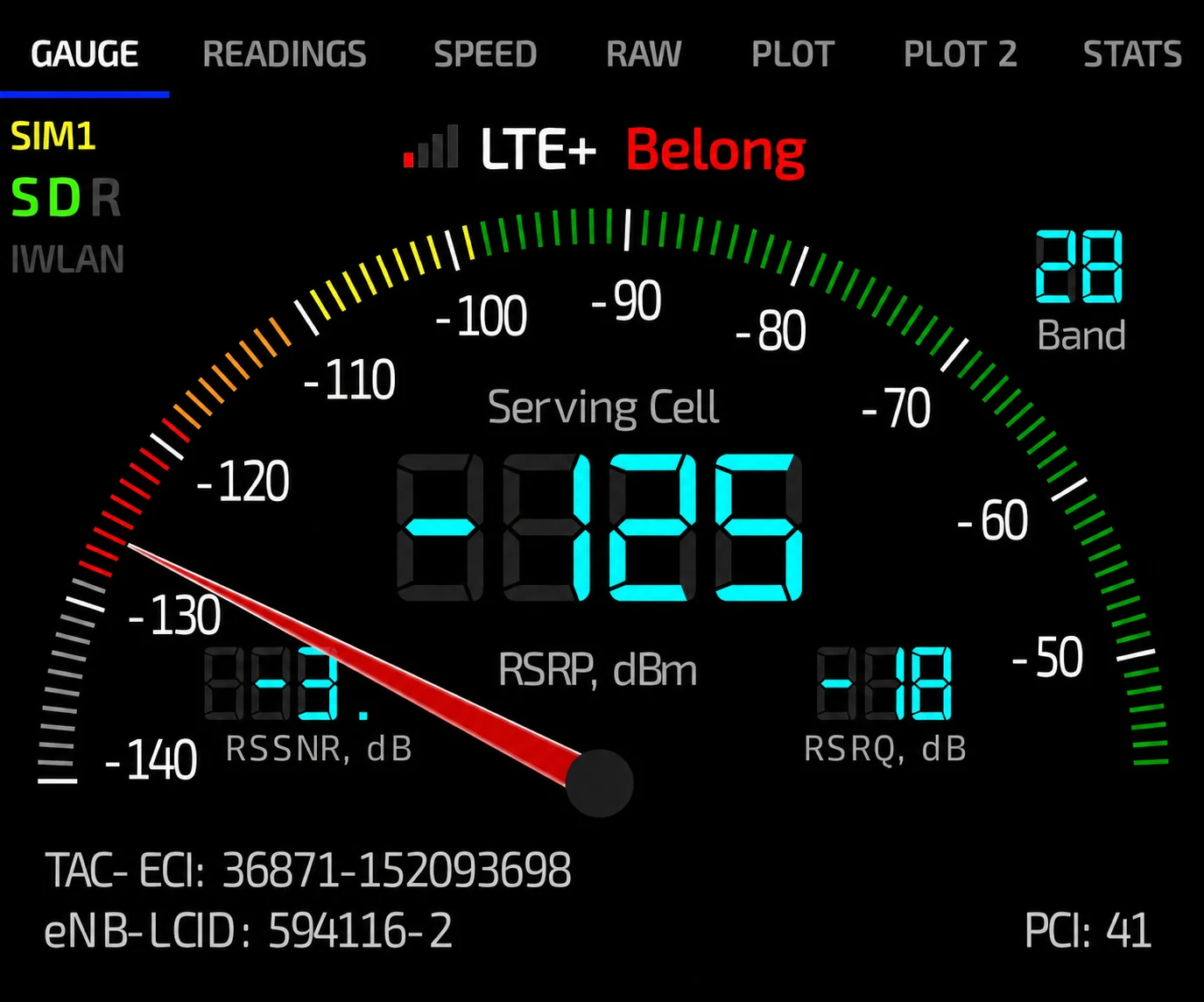
−125 dBm
Indoor RSRP measured on site
18 mo
Unresolved coverage complaints
1 WAP
The actual fix
1992
Validating Layer 1 under load
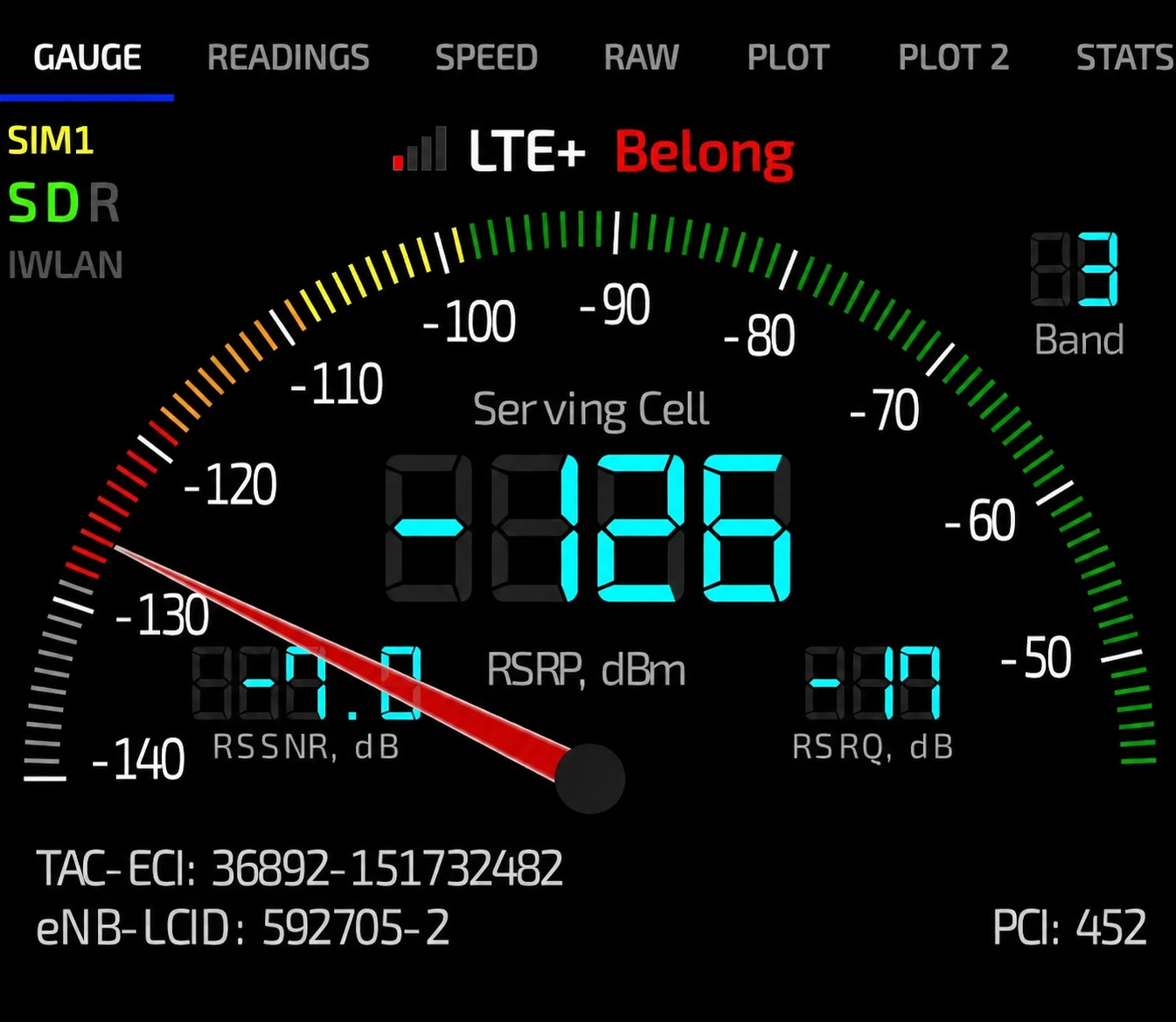
Real measurement, taken on site. −126 dBm RSRP, well below the −120 dBm absolute floor for a reliable donor signal.
A cellular repeater only works if there is something worth repeating. The survey that rules one out is not a failed survey. It is the one that found the real problem.
The situation
Dropped calls. Wrong diagnosis. Nearly the wrong solution.
For 18 months, staff at a national logistics operator's site offices near Perth Airport couldn't hold a reliable phone call inside the buildings. The complaint was clear. The proposed fix was clear. A Nextivity Cel-Fi G41 smart repeater with a rooftop donor antenna would pull in the macro network signal and rebroadcast it inside. Proven technology. Practical installation. Price confirmed.
Before the order went in, someone asked the right question: has anyone actually measured the donor signal?
There was pressure to skip the assessment. Why spend on a survey when that money could go toward the hardware? Our answer is always the same: we validate before we install, without exception. A repeater deployed onto an unmeasured donor environment is not a cost saving. It is a gamble with the client's money and our name on it. The assessment went ahead.
What the survey found
The signal wasn't weak. It was absent.
Our technician attended site on 14 July 2026 and ran indoor handset measurements in both offices, then repeated testing across the rooftop and surrounding structures. The numbers came back the same way twice.
Location
RSRP Reading
Technology
Assessment
Staff office, indoor handset
−126 dBm
4G LTE
Below absolute practical floor
Managers office, indoor handset
−125 dBm
4G LTE
Repeater cannot work reliably
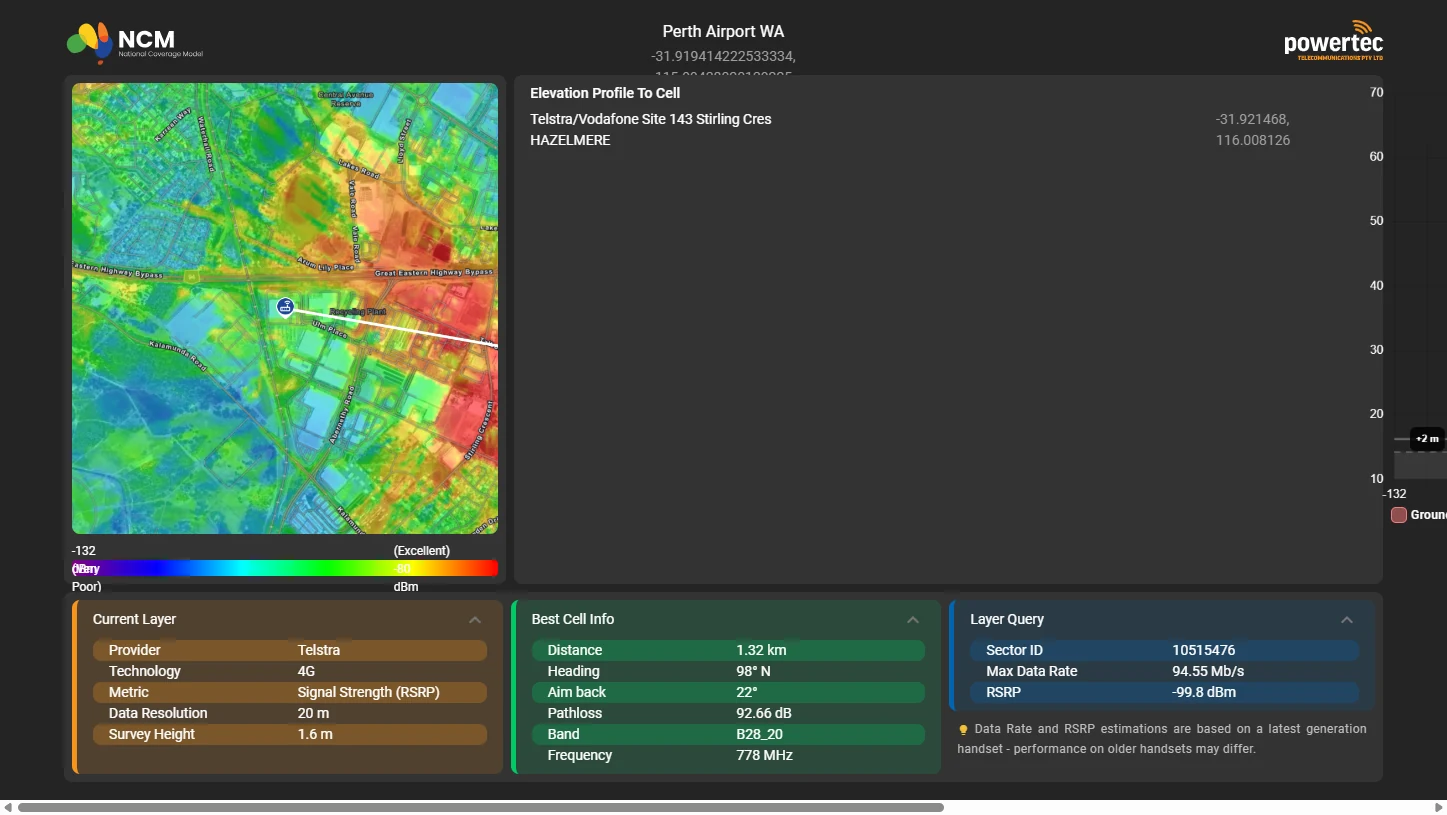
NCM model, 4G B28 / 778 MHz
−99.8 dBm
Predicted outdoor at 1.6 m
Does not override on-site measurement
Best cell, nearest tower
1.32 km / 92.66 dB pathloss
Heading 98° N
High-rise steel deflects signal at ground level
Staff office: −126 dBm RSRP. Real reading, taken on site 14 July 2026.Managers office: −125 dBm RSRP. Both offices confirmed the same story.
The predicted coverage model showed materially stronger outdoor conditions at survey height. This is exactly why field measurement matters: a model does not override what the handset reads on site. Between the model and the meter sat several storeys of high-rise steel, deflecting and absorbing signal before it reached ground level.
NCM predicted −99.8 dBm at 1.6 m survey height. The handset measured −125 dBm indoors. The steel between those two numbers is the whole story.
The RSRP reference
Where this site sits against the scale.
This table is the save-worthy reference for any in-building cellular assessment. The readings from this site sit at the bottom.
RSRP Range
Signal Quality
Repeater Suitability
−70 to −90 dBm
Excellent
Ideal donor signal
−90 to −100 dBm
Good
Reliable repeater operation
−100 to −114 dBm
Fair
Marginal: assess carefully
−114 to −120 dBm
Poor
Absolute practical limit
−125 / −126 dBm
This site
Below the floor: repeater will not work
The rooftop
No stable path. In any direction.
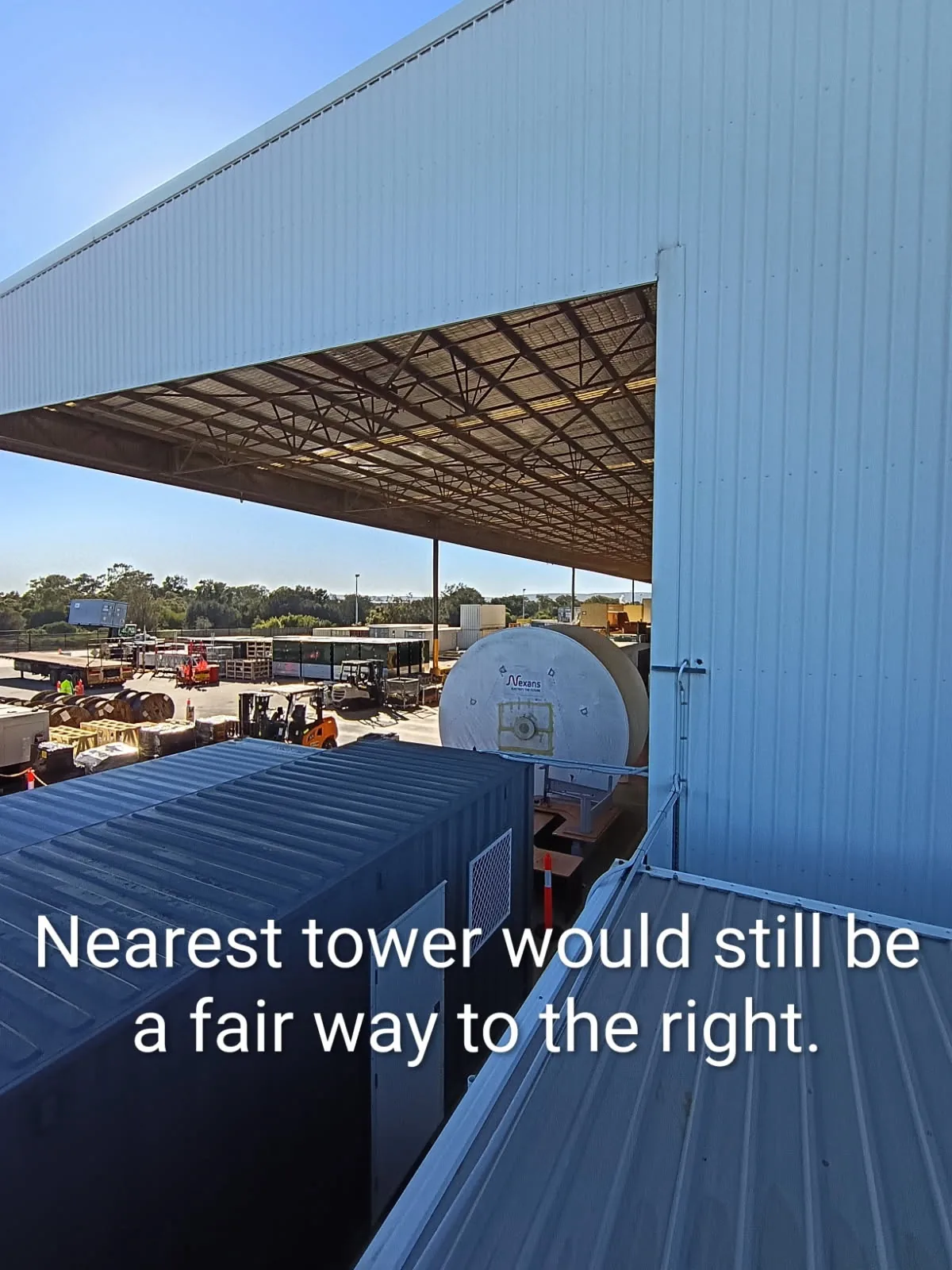
The nearest serving cell sits roughly 1.3 km from the site. On flat ground with clear line of sight, that distance is trivial. At this precinct, high-rise steel structures deflect and absorb signal before it reaches ground level, pushing users away from the nearest cell and toward more distant towers. Rooftop testing confirmed it: no stable, usable donor signal in any direction.
Rooftop view toward the nearest serving cell. The path is obstructed. The tower sits well beyond the visible opening.
During the assessment, one measurement set briefly indicated a signal level with potential. It could not be reproduced consistently under test conditions. You do not design a system around a reading you saw once. A repeater built on an unstable donor signal delivers unstable coverage, and the client pays for both the installation and the disappointment.
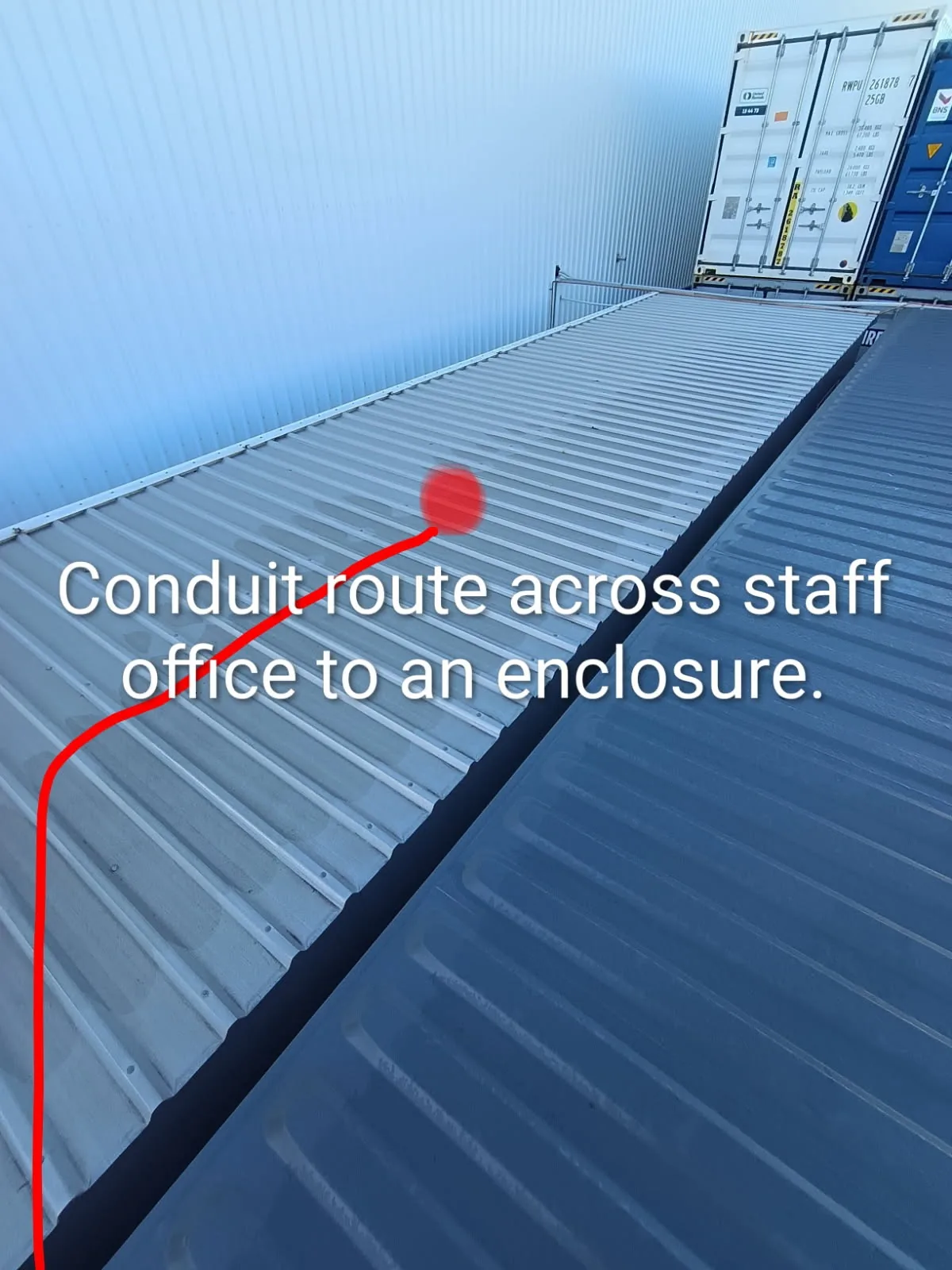
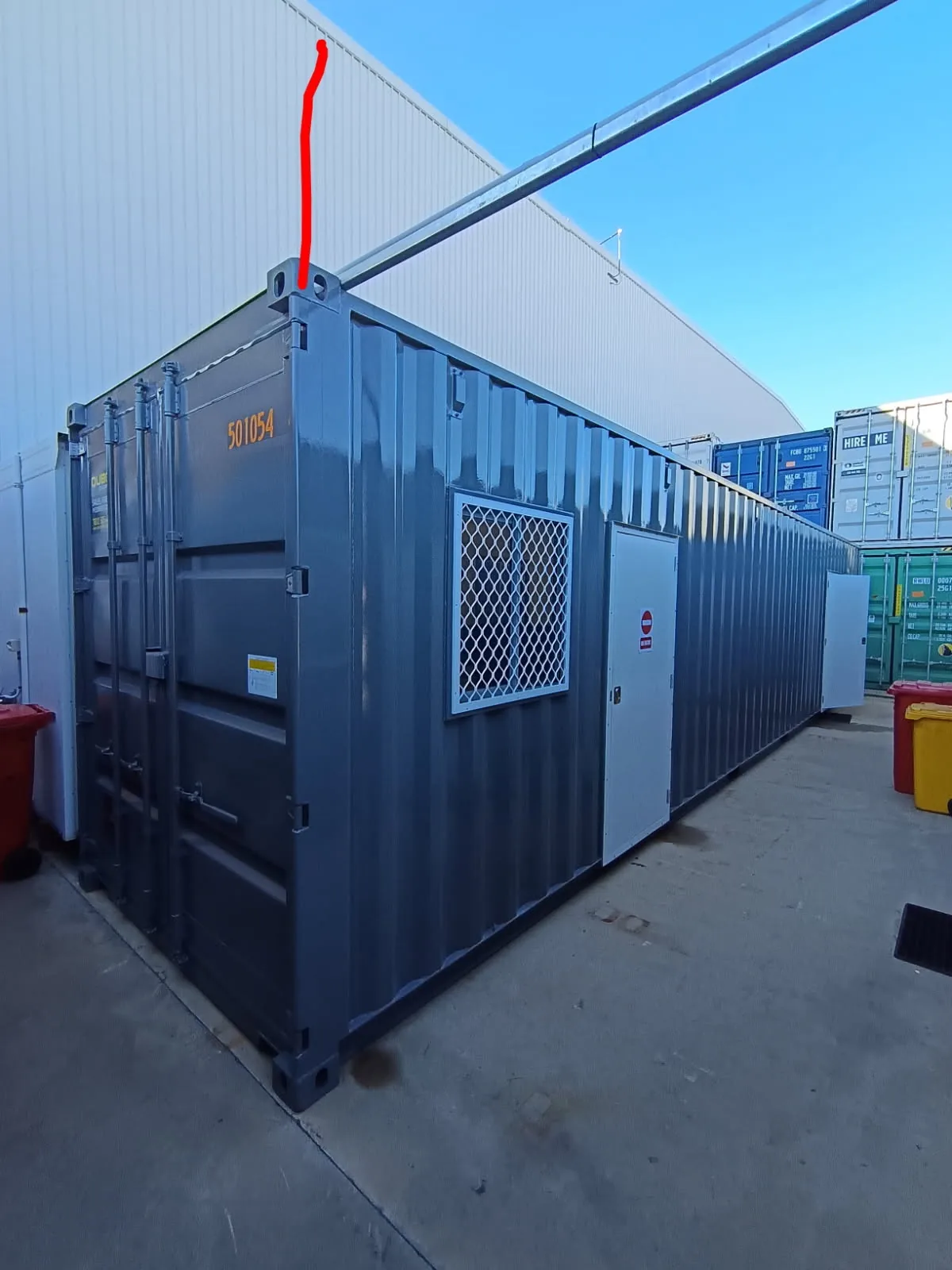
The install side was never the problem: clean conduit route, weatherproof enclosure, sealed penetration all confirmed.Indicative mast position assessed and ruled out. Signal is blocked at this height on the container structure.
Voice vs data
Why data gets through when calls don't.
The site already had an antenna system delivering slow, sub-standard data connectivity. That raised a fair question: if data limps through, why can't calls?
Data forgives a poor signal. When packets are lost, systems resend them. Voice cannot resend a moment of your sentence.
Telephony is real time. A dropped voice packet is gone. That is why the signal threshold for reliable calls sits significantly higher than what a marginal data connection can tolerate. Any in-building coverage assessment that treats voice and data as the same problem is going to over-promise.
The finding
The problem was never cellular.
With the repeater ruled out, one question sharpened: if the cellular signal was always this bad, how did calls ever work here at all? Those steel structures did not appear last month. The signal we measured at −125 dBm was not a recent degradation. If this had always been the ambient condition, mobile telephony should never have worked here.
It turned out it had not. Not over the mobile network. Every call at this site had been travelling over Wi-Fi calling (VoWiFi), carried by the site's wireless network, completely invisibly to the people making the calls. The mobile macro network was never doing the work. The access points were.
And roughly 18 months before the complaints began, the wireless access point serving the managers office went missing. Removed, relocated, or lost. Nobody recorded it, and nobody connected that event to what followed. The residual Wi-Fi bleeding into the office through steel cargo container walls was nowhere near stable enough to hold a voice call. Complaints reached head office. The complaints looked cellular, so the fix being priced was cellular.
An access point vanished without a paper trail. Eighteen months later, the business was pricing a cellular repeater to fix it.
The outcome
What we recommended. And why.
Confirmed suitable
Installation pathways
Cable routes, mounting positions, penetrations, and conduit runs all practical. The install side was never the constraint.
Not recommended
Standard Cel-Fi G41 installation
Donor signal too weak and too unstable. We do not install systems we cannot stand behind.
High risk
Directional rooftop antenna trial
Possible in principle. No stable signal path identified to design around. One promising reading does not make a design basis.
Actual fix
Replace the missing WAP. Restore Wi-Fi calling.
A properly positioned, validated access point in the managers office puts voice traffic back on the path it had always used. No repeater. No donor antenna. The survey that said no to a multi-thousand-dollar hardware install pointed directly to a fix costing a fraction of it. The assessment fee was not a cost. It was the difference between an answer and an expensive failure.
What this means for your site
You cannot troubleshoot what you don't know exists.
If your team is dropping calls inside a warehouse, plant room, site office, or hospital wing, the fix starts with measurement, not equipment. Our in-building 4G/5G work covers cellular repeater, DAS, and Wi-Fi calling: each one is only as good as the physical layer feeding it, and the right answer depends on what the site can actually receive and what the site actually has installed.
This job is a warning about documentation. The symptom was poor mobile coverage. The cause was an undocumented change to the wireless network 18 months earlier. When infrastructure changes go unrecorded, the symptom and the cause drift apart until someone nearly buys the wrong solution. New buildings, new machinery, denser precincts, and carrier network changes all shift the RF environment around your site without asking permission.
Risk isn't old technology. It's undocumented, unvalidated infrastructure.
When did someone last check whether what's installed on your site matches what you think is there?
Get the signal facts before you spend on hardware.
AAA Communications delivers in-building 4G/5G coverage and enterprise Wi-Fi validation nationally. Site surveys, RSRP measurement, donor path analysis, Cel-Fi and hybrid system design, installation and commissioning, for all carriers. Telstra Partner since 1992.
Straight answers on signal thresholds, donor antennas, voice vs data, and when Wi-Fi calling is the right solution.
What RSRP level does a Cel-Fi G41 need to work reliably? +
As a working field guide, RSRP between -70 and -90 dBm is excellent, -90 to -100 dBm is good, and -100 to -114 dBm is fair. Below -114 dBm is poor, with an absolute practical limit around -120 dBm. Readings of -125 to -126 dBm, as measured on this site, sit below the floor for a reliable donor signal.
What is a donor antenna in a Cel-Fi installation? +
The donor antenna is the outdoor antenna that captures the carrier's macro network signal and feeds it to the Cel-Fi repeater, which rebroadcasts amplified coverage indoors through service antennas. If the donor signal is weak or unstable, the entire system underperforms regardless of how well the indoor side is installed.
Why does voice calling need a stronger signal than data? +
Data is tolerant of poor signal because lost or delayed packets are simply resent. Voice is real time. A dropped voice packet cannot be resent, so telephony requires a consistent, stable signal at a significantly higher threshold than a marginal data connection can tolerate.
Can Wi-Fi calling replace a cellular repeater in a low-signal building? +
Often, yes. Where outdoor cellular signal is genuinely unusable, Wi-Fi calling (VoWiFi) carries voice over the site's wired network and wireless access points instead of the mobile macro network. It requires properly placed, validated access points with sufficient coverage and capacity in the areas where people actually make calls. On this site, mobile telephony had been running over Wi-Fi calling all along, until the access point serving the managers office went missing.
Why do undocumented network changes cause coverage complaints? +
When infrastructure changes are not documented, the symptom and the cause become disconnected. On this site, an access point was removed 18 months before the complaints were investigated. Nobody recorded it, so the problem presented as poor mobile coverage and was nearly solved with the wrong hardware. You cannot protect, or troubleshoot, what you don't know exists.